If hiring feels harder than ever, you're not imagining it.
A role gets posted. Within hours, 400 resumes flood in. Half look identical: same buzzwords, same formatting, same AI-polished language. Interviews feel promising, but bad hires keep happening. Great candidates ghost mid-process. Time-to-hire stretches from weeks into months. Recruiter burnout climbs. And somehow, with more recruiting technology than ever before, finding truly qualified candidates feels... harder.
So why is hiring so hard?
Here's the uncomfortable truth: Most teams aren't lacking talent. They're drowning in it.
And most hiring processes were never designed to handle this kind of volume.
The Real Problem: Volume Without Clarity
Job boards generate hundreds of applicants per role. Professional networks create massive pipelines. Inbound funnels, referrals, outbound sourcing, recruiting agencies; all of it creates candidates.
But pipelines don't equal clarity.
Instead, talent teams are left manually reviewing, filtering, and guessing about who's actually the best fit.
This forces recruiters and hiring managers into impossible choices:
- Skim resumes instead of evaluating them thoughtfully
- Use keyword filters instead of assessing actual capability
- Advance candidates based on speed, not fit
The result? Great candidates get buried. Average candidates move forward. And interviews become the screening layer instead of the validation layer, which means hiring managers waste hours talking to people who should never have made it past the first round. That's not a hiring process. That's triage.
The Resume Problem: Built for a Different Era
Resumes were designed for a smaller, slower hiring world. Today, they're optimized for ATS systems, not humans. They're inflated with buzzwords, inconsistent across candidates, and terrible predictors of actual performance. Two candidates can look nearly identical on paper and perform wildly differently on the job. One has 5 years of React experience leading a team through a major migration. The other has 5 years of React experience copy-pasting Stack Overflow code. Both resumes say "Senior React Developer."
How do you tell the difference when you're looking at 400 of them?
You can't. Not at scale.
When hiring decisions are anchored primarily to resumes, teams are forced to guess. And guessing doesn't scale, especially when there's no time to deep dive into each candidate's public profile, check if they were promoted or demoted, understand their actual specialties, or trace their career arc.
Why Throwing Money at the Problem Doesn't Work
When hiring feels impossible, the knee-jerk reaction is: "Let's spend more."
Hiring managers throw thousands of dollars at professional-network recruiter seats. They bring in staffing agencies. They expand job board budgets.
And then they discover they're in the exact same boat, just paying someone else to skim those same hundreds of resumes.
The problem isn't that teams need more candidates. It's that they need better ways to see the candidates they already have.
More sourcing without better evaluation just makes the pile bigger.
What's Actually Changing: From Searching to Analyzing
The teams that are solving this problem aren't adding more sourcing channels.
They're shifting focus: from searching for profiles to actually analyzing talent.
Instead of relying on manual sourcing and resume review, they're adopting systems that can:
- Search massive talent pools simultaneously (past applicants, passive candidates, internal mobility)
- Evaluate candidates against role-specific criteria (not just keywords)
- Identify patterns across experience and skills (adjacent capabilities, transferable experience)
- Rank candidates by true relevance (with reasoning you can see and verify)
- Deliver structured shortlists (not just raw pipelines)
This shift frees teams to focus where they're actually strongest: judgment, conversation, and decision-making. Not administrative work. Not guessing. Not drowning.
The Three Things That Need to Change
If hiring feels impossibly hard right now, it's because three foundational assumptions about the hiring process are breaking down:
1. "More candidates = better odds"
Old thinking: Cast a wide net. Post everywhere. Get as many applicants as possible.
New reality: More candidates without better evaluation just creates noise. The goal isn't a bigger pile, it's a clearer view of the pile you already have.
What works instead: Search comprehensively (past applicants, passive talent, internal candidates) but evaluate intelligently. Find the signal in the noise before you start scheduling interviews.
2. "Resumes tell you who's qualified"
Old thinking: If the resume looks good and matches the job description, they're probably qualified.
New reality: Resumes are marketing documents optimized for ATS systems. They tell you what someone wants you to think about them, not necessarily what they can do.
What works instead: Look beyond keywords. Assess project outcomes, leadership indicators, skill depth, and adjacent capabilities. Two people with "5 years of Python" are not the same candidate.
3. "Interviews are for evaluation"
Old thinking: Use phone screens and interviews to figure out if someone can do the job.
New reality: If you're using interviews to screen for basic fit, you're wasting everyone's time, including your hiring managers'. Interviews should validate what you already believe to be true, not discover it from scratch.
What works instead: Screen thoroughly before the interview. Use interviews to assess culture fit, communication style, team dynamics, and nuanced judgment calls that only humans can evaluate. Not "Can they code?" but "Will they thrive here?"
Where AI-Driven Hiring Platforms Fit
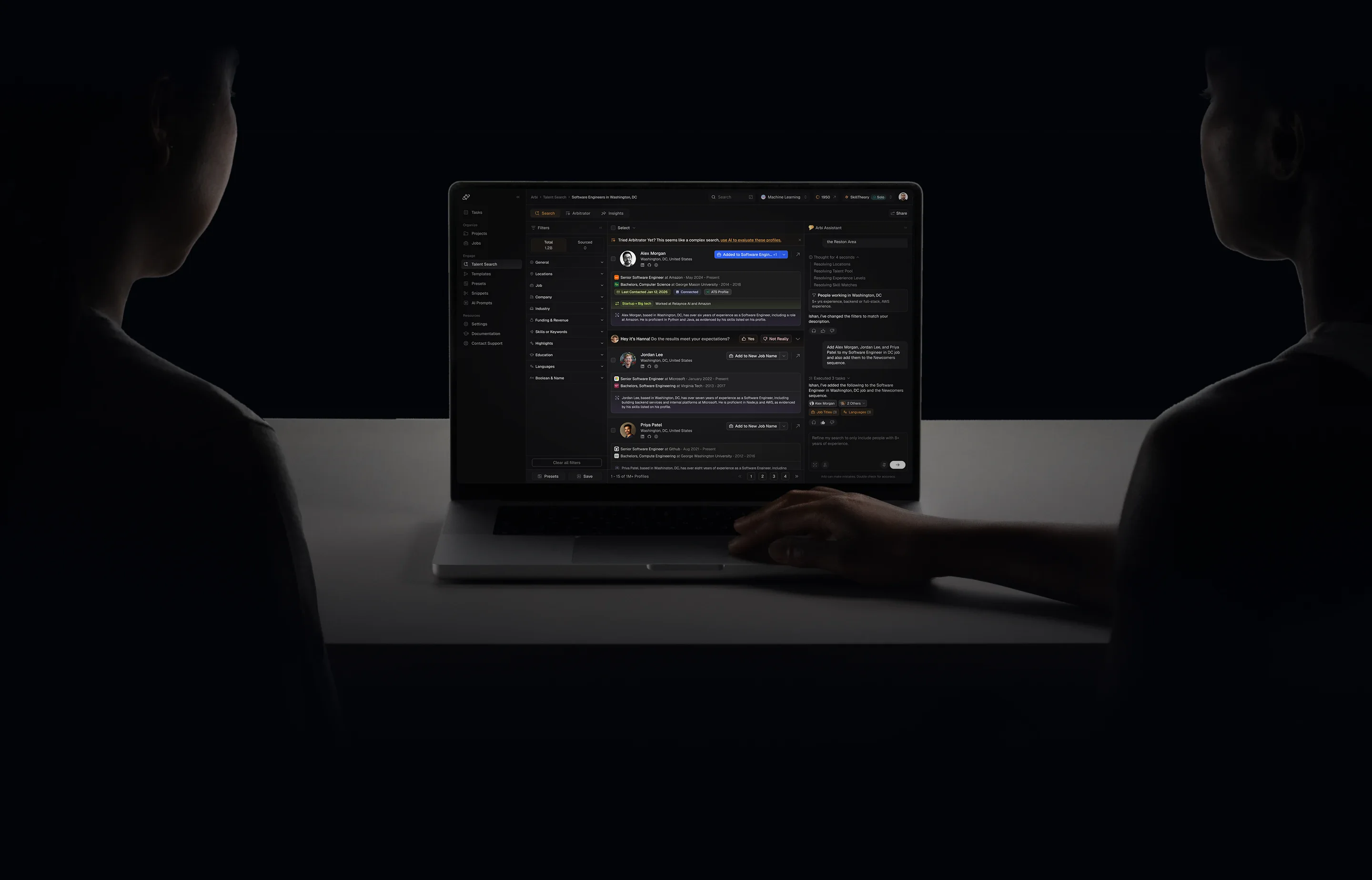
This is where tools like Neuroscale “Arbi” are changing the equation. Rather than forcing teams to hunt across platforms and manually build lists, Arbi enables hiring teams to describe the candidate they need and from there, it searches across massive talent pools across over 800M profiles to automatically evaluate and rank candidates. You get dozens of features and capabilities to replace the looming pipeline of losing out on great talent. The goal isn't to replace recruiters or hiring managers. It's to remove the parts of hiring that are hardest to do well at scale, and free teams to spend their time where it actually matters: building relationships, assessing culture fit, selling candidates on the opportunity.
The Shift That's Happening (Whether Teams Realize It or Not)
As talent markets grow and candidate volumes increase, hiring will only feel manageable when:
- Evaluation scales with sourcing If you can source 10,000 candidates but only evaluate 50, you're not solving the problem.
- Shortlists become structured Raw pipelines ("here are 200 resumes") don't help. Structured shortlists ("here are 15 candidates, ranked with reasoning") do.
- Interviews are used for validation, not screening Hiring managers should spend their time assessing judgment, communication, and fit; not asking "Can you explain what you did in your last role?" That should be clear before the interview starts.
- Technology handles the heavy lifting The parts of hiring that are repetitive, time-consuming, and hard to do consistently at scale? Those should be automated. The parts that require human judgment, empathy, and relationship-building? Those should get more time.
What This Means for Talent Teams Right Now
If hiring feels impossibly hard, here's what to ask:
"Are we solving a sourcing problem or an evaluation problem?"
If you're struggling to find candidates: You have a sourcing problem. If you're drowning in candidates but can't identify the right ones: You have an evaluation problem.
Most teams think they have a sourcing problem. Most teams actually have an evaluation problem.
"Are we using interviews to screen or validate?"
If hiring managers are spending hours talking to unqualified candidates, the screening layer failed. Fix that first, before you schedule more interviews.
"Can we defend our hiring decisions?"
If someone asked, "Why did you advance Candidate A over Candidate B?" could you explain it with evidence? Or are you going with gut feel and hoping it works out?
Transparent, defensible hiring isn't just good for compliance. It's good for outcomes.
The Teams That Hire Smarter, Not Harder
The organizations that are winning the talent war right now aren't the ones hiring the fastest. They're the ones hiring the smartest. They've realized that:
- More candidates without better evaluation just creates bigger piles
- Resumes are a starting point, not the answer
- Interviews should validate judgment, not discover basic fit
- Technology should handle scale, so humans can handle nuance
These teams don't have bigger budgets or better employer brands. They just stopped solving the wrong problem.
Ready to Hire Smarter?
If your team is drowning in resumes, wasting time on unqualified candidates, or watching great talent slip through the cracks, it's not because you're bad at hiring. It's because the process wasn't built for this kind of volume. Neuroscale Arbi helps talent teams move from guessing to knowing, by searching comprehensively, evaluating transparently, and delivering structured shortlists you can actually use.
See how it works: Email us at [email protected] for a quick walkthrough or simply sign up for a month. No lengthy demos, no sales theater; just your real data, analyzed in real time, so you can see the difference for yourself.
Because hiring shouldn't feel this hard.
About Neuroscale AI: Neuroscale AI developed Arbi, an AI recruiting OS (Operating system) designed to help talent teams surface the candidates they're missing, evaluate & reach the best fit and make decisions they can defend. The company believes hiring should get easier as technology improves, not harder. Learn more at neuroscale.ai.
Related Reading:
- Global Recruiting Trends 2025
- SHRM: "The True Cost of a Bad Hire"
- Lever: "Why Time-to-Hire Keeps Increasing"
- Greenhouse: "The State of Candidate Experience"