

The first read is done
Screening runs on the whole response at once, so the shortlist is waiting rather than being assembled after hours.
Agencies win on speed and judgement, then spend the day on neither. Arbi takes the searching and the first read off the desk, so a brief becomes a shortlist the same morning.
Join the next generation of companies hiring smarter, faster, and on autopilot with Arbi.
Case StudiesIt is how long one consultant takes to turn a brief into a shortlist they can defend. That is the part of the day Arbi gives back.
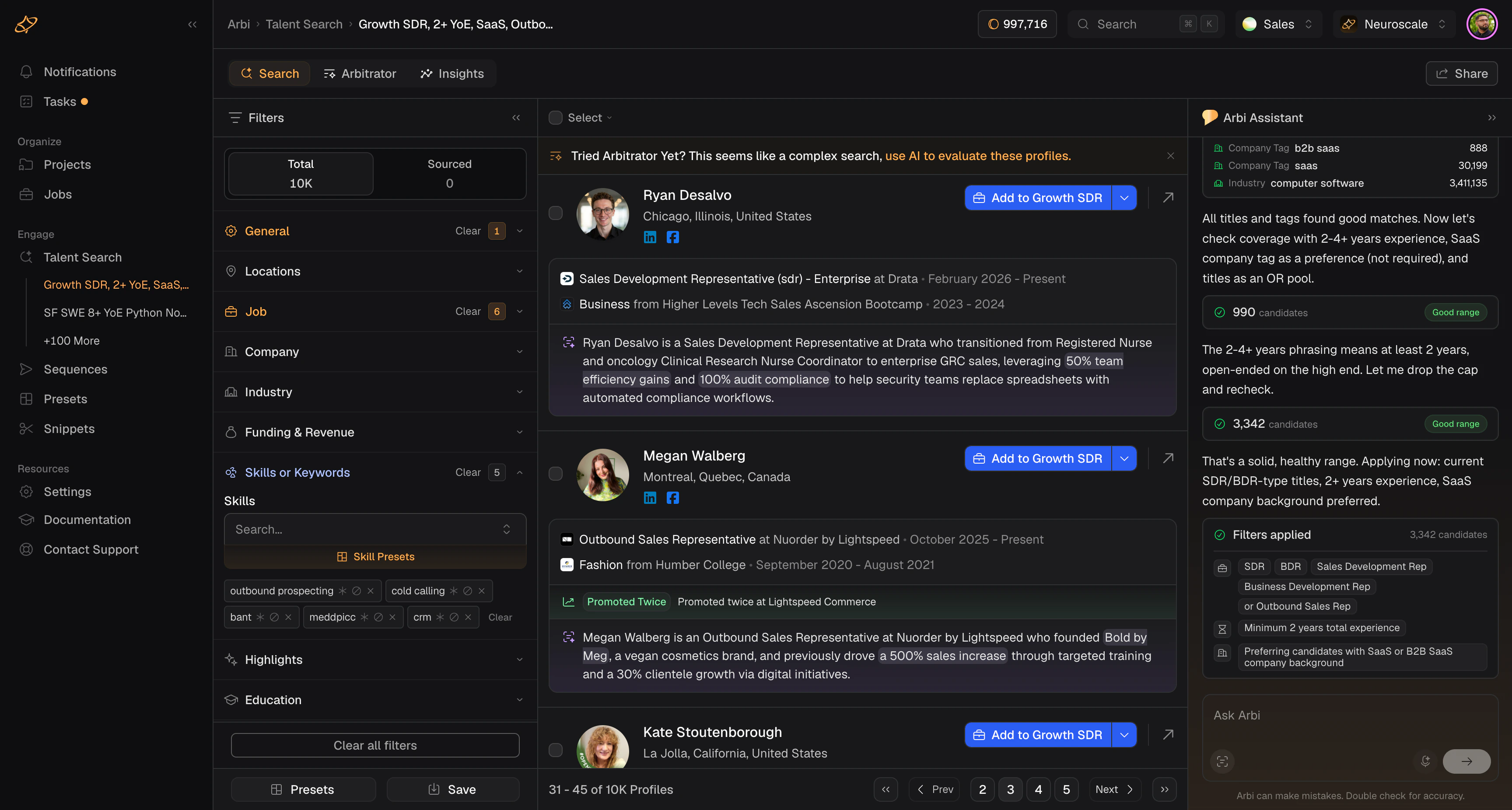
Paste the spec or describe the role the way the client described it to you. Arbi turns it into a live search and a set of written criteria you can edit.
Ranked matches arrive with verified emails and direct numbers, already checked against everyone your desk has approached before.
Sequences send from your consultants' own mailboxes across email and social, and every reply lands in one inbox instead of four.
Each candidate goes over with the criteria they met and the proof underneath, so the shortlist makes its own argument.
A good agency response is a problem as much as a relief. Arbi measures the whole of it against the criteria on the brief and records why each person passed or did not, so the queue a consultant opens has already been read.
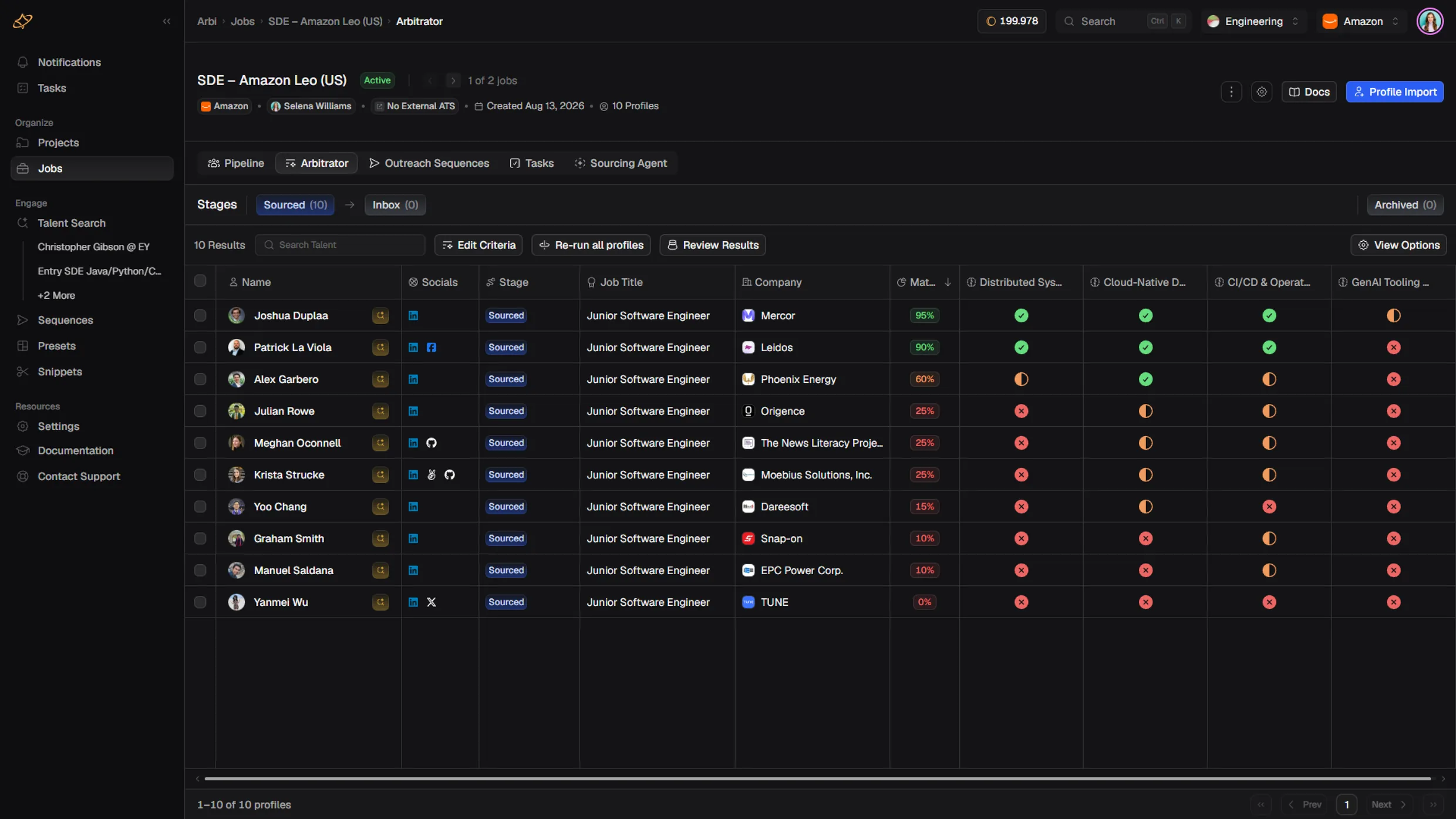
Screening runs on the whole response at once, so the shortlist is waiting rather than being assembled after hours.
Criteria live on the requisition instead of in a consultant's head, which is what lets two desks agree on the same shortlist.
Arbi tracks who your desk has already contacted and keeps client exclusion lists out of the results entirely.

“We win against bigger firms on how well we understand a brief. What we could never win on was throughput. That is the part we handed over.”
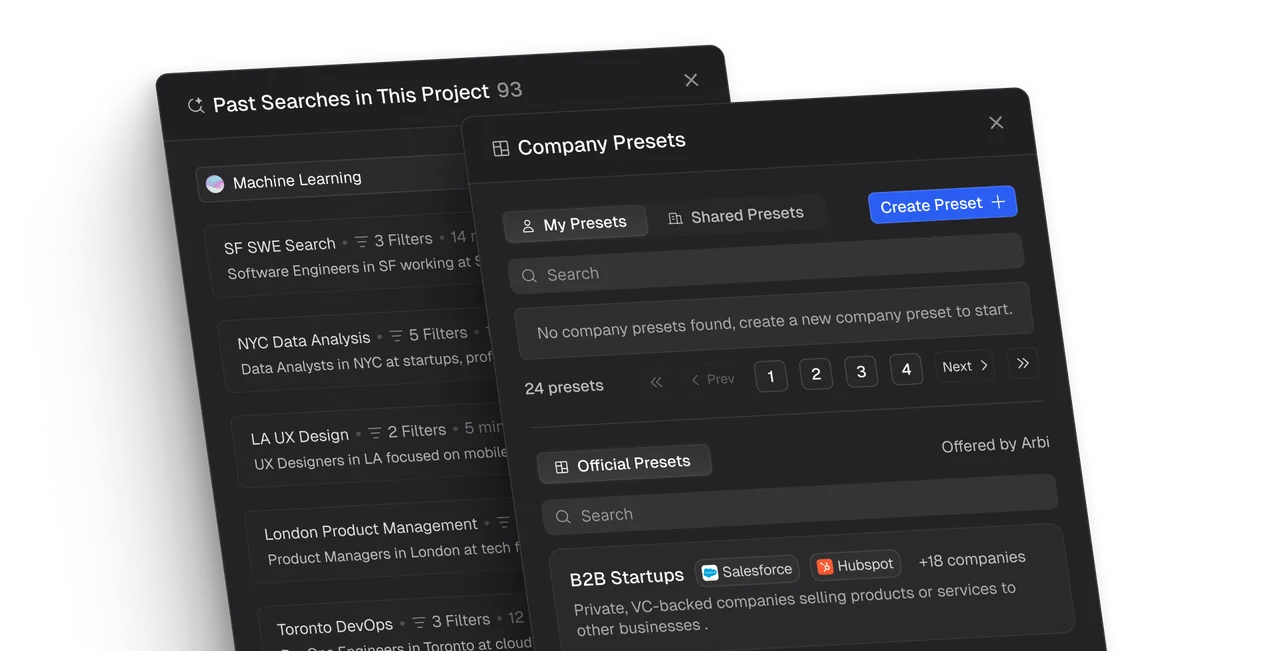
Save the search behind a filled role and run it again the next time the client comes back. An evergreen req never starts from an empty page.
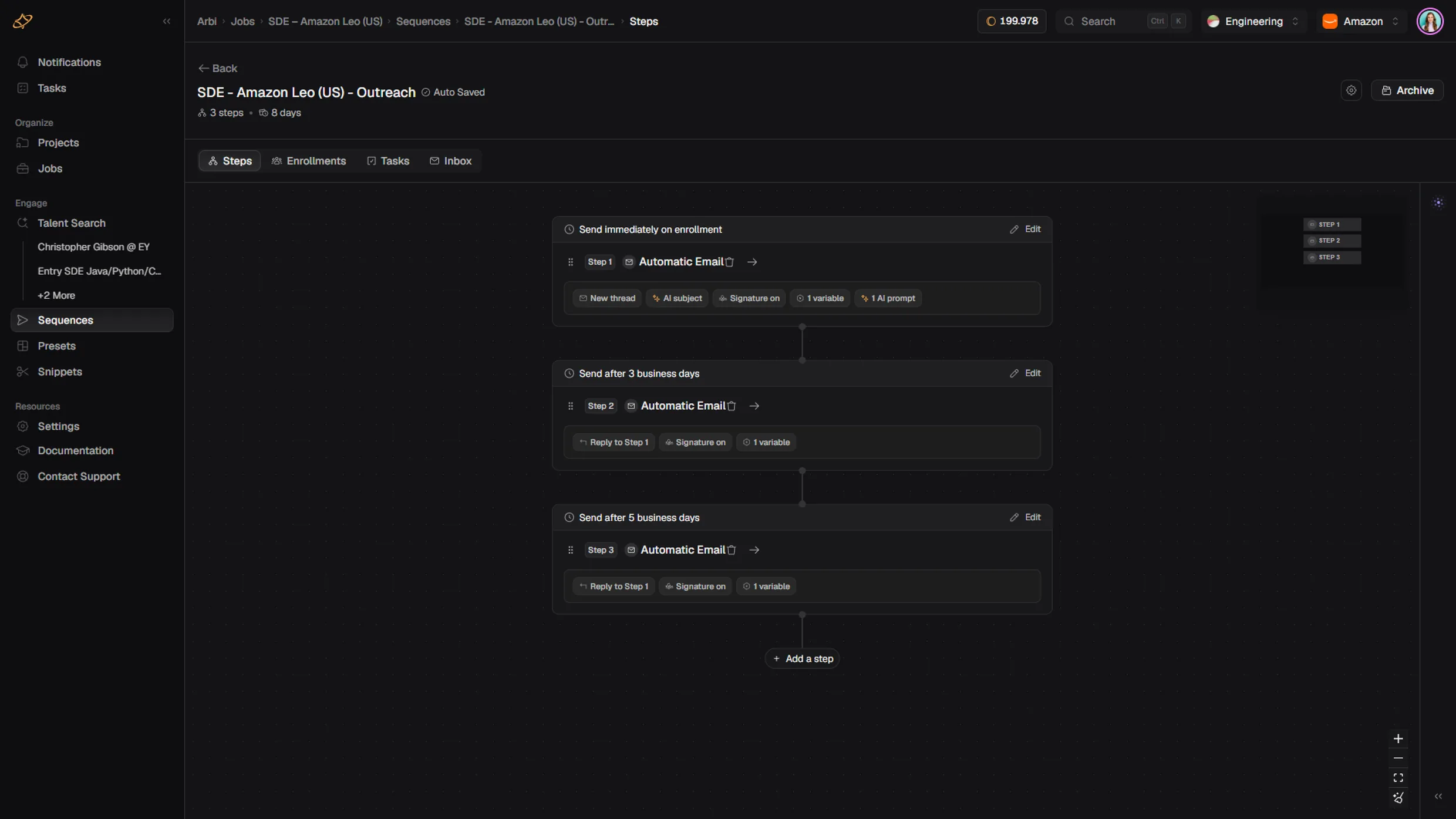
Multi-step outreach across email and social, sent from the consultant's own address, with every reply landing in one shared inbox.
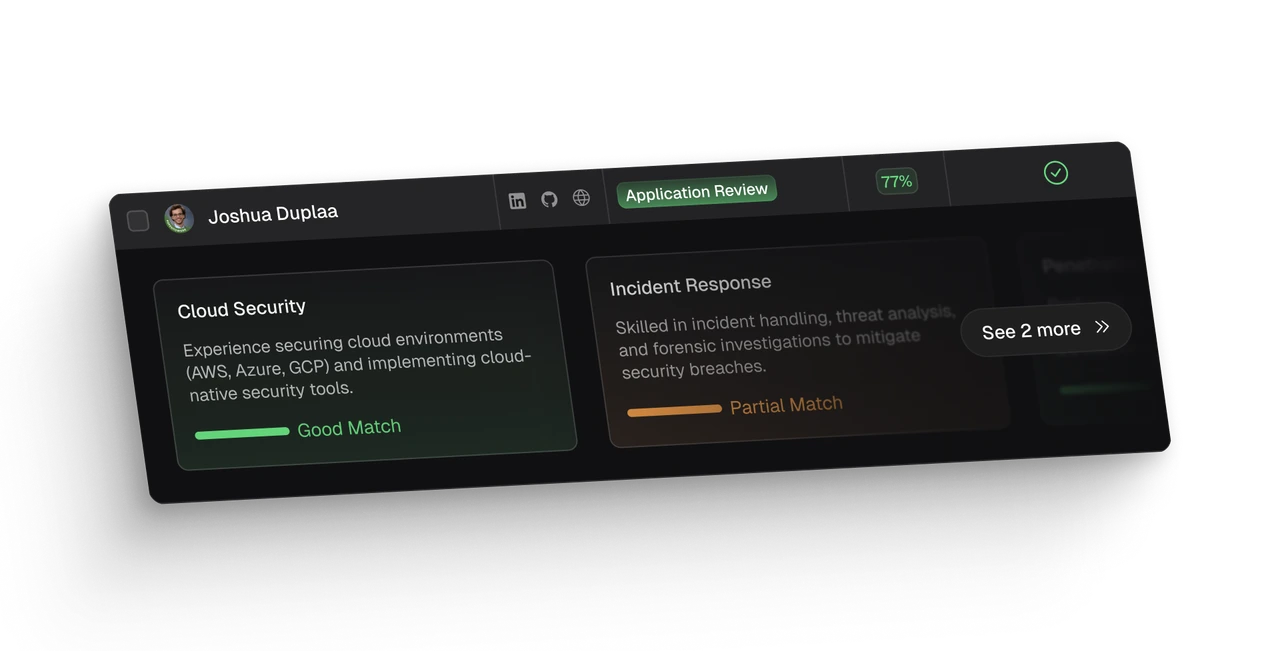
Each decision carries the lines it was based on. That is the difference between a shortlist and an opinion when a client pushes back.
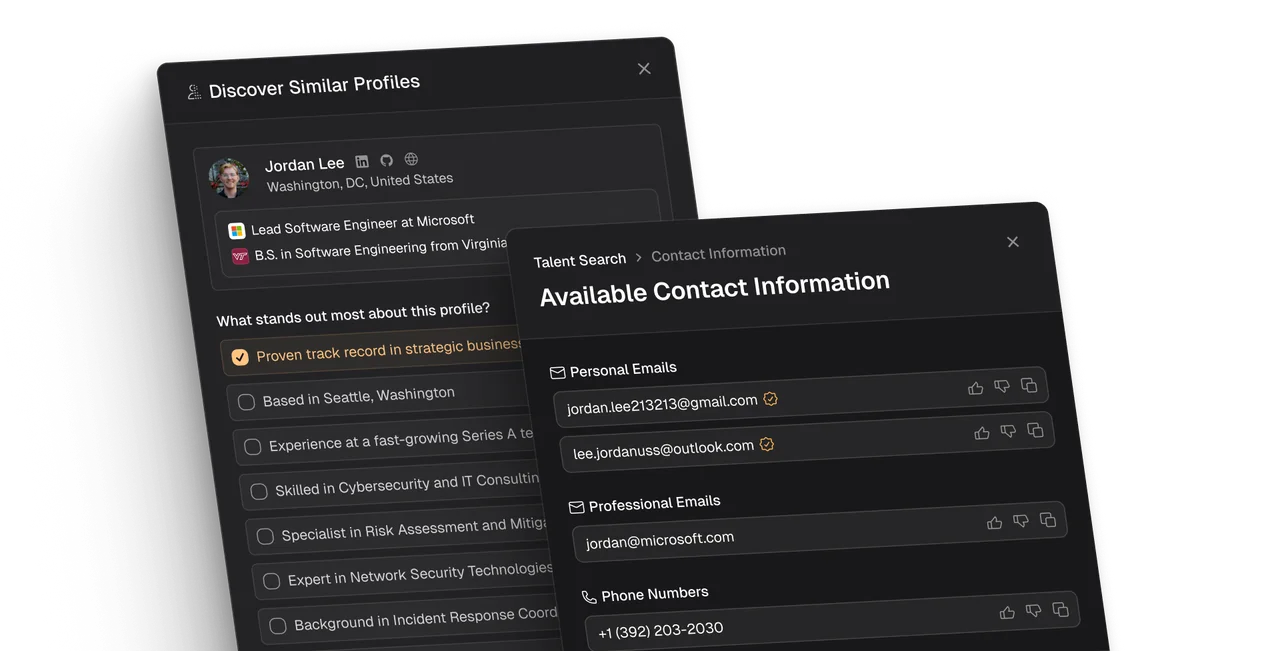
Personal and work emails plus direct numbers, verified before they reach a sequence, so a send is a conversation rather than a bounce.







Connect Arbi to your existing stack with 50+ integrations built for modern hiring workflows.





Yes. Every requisition carries its own criteria, its own sequences and its own exclusion list, so a candidate you have promised to one client does not turn up in a search you run for another. Consultants see the desks they work on, and the account owner sees all of them.
Company level exclusion lists apply to every search on the account, so a protected client never appears in results. Arbi also shows the last time anyone on your desk approached a person, and can hide previously contacted candidates entirely.
Branded exports carry your logo and your format, with the criteria each candidate met and the evidence behind each verdict. What the client opens looks like your work rather than ours, and it answers the why before they ask it.
Arbi syncs in both directions, marks the people who already exist in your system, and pushes new candidates into a job or an outreach sequence in one click. Your pipeline stays accurate in both places without anyone copying records between tabs.
Seats are billed monthly or annually and credits are pooled across the account rather than issued per consultant, so a quiet desk does not strand an allowance a busy one could have used. Credits bought as an add-on do not expire while the subscription is active.
Most people run their first useful search on day one, because the way in is describing the role the way the client described it to you. The two parts worth training properly, writing criteria and building sequences, are about a session each.