
Every decision on file
Criteria applied, evidence read, verdict reached, kept per candidate and per requisition from day one.
Public sector hiring carries rules that private hiring never sees. Arbi applies your written criteria to every candidate, documents every decision, and cuts months off the time a cleared or regulated role sits open.
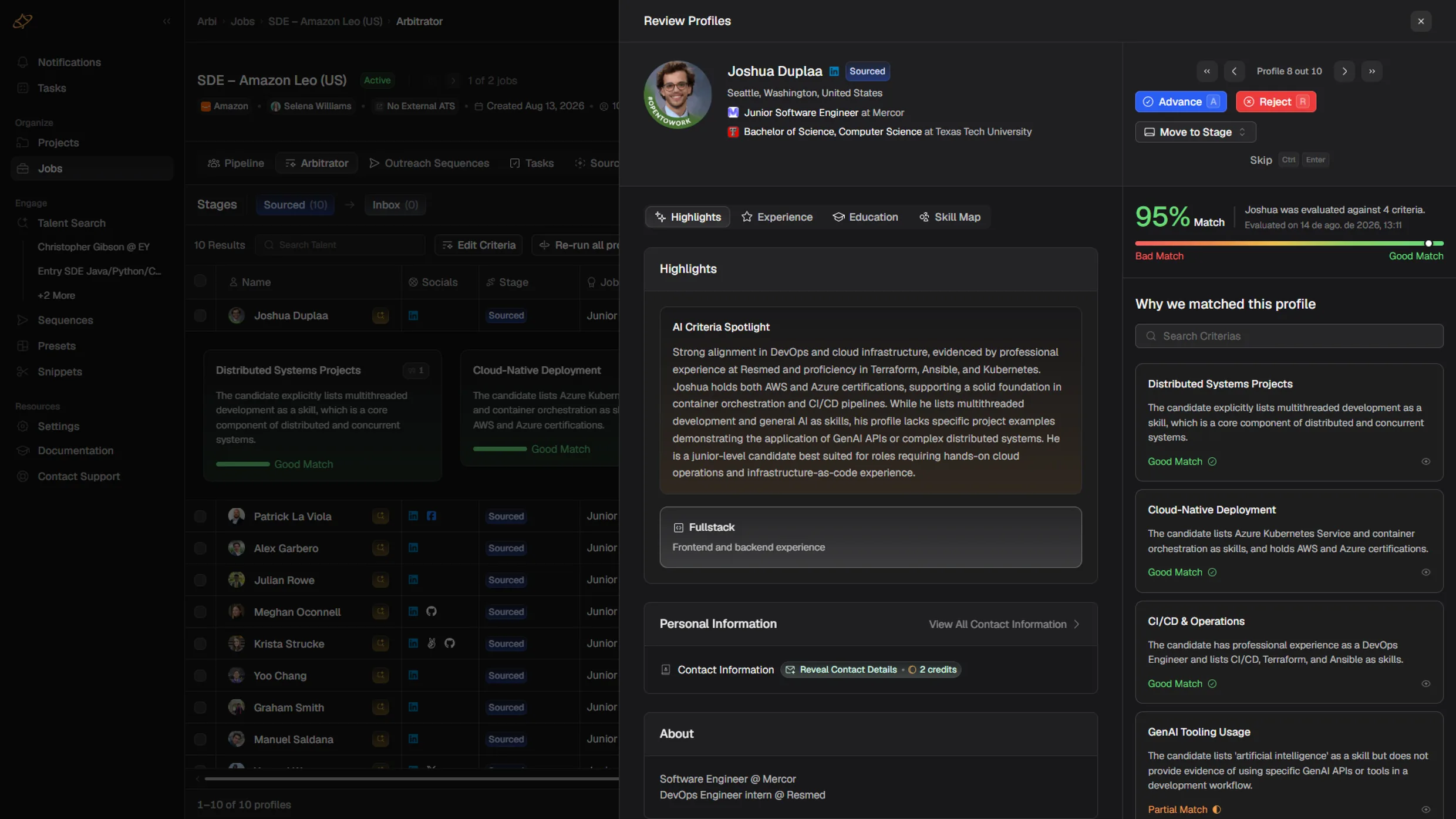
Join the next generation of companies hiring smarter, faster, and on autopilot with Arbi.
Case StudiesRegulated hiring is slow where it should be careful and slow where it should be fast. Arbi keeps the care and returns the time.
Clearance, eligibility, and qualifications become written criteria on the requisition, applied the same way to every applicant.
Every application is read against those criteria in minutes, and every verdict records the lines it was based on.
Where eligible candidates are scarce, Arbi searches the market for people who meet the requirements and verifies how to reach them.
The panel sees the same criteria and the same evidence, and the file that satisfies the audit already exists.
In public sector hiring, the decision is only half the job; proving how it was made is the other half. Arbi records the criteria, the evidence, and the verdict for every candidate as a side effect of screening them, not as a second task.
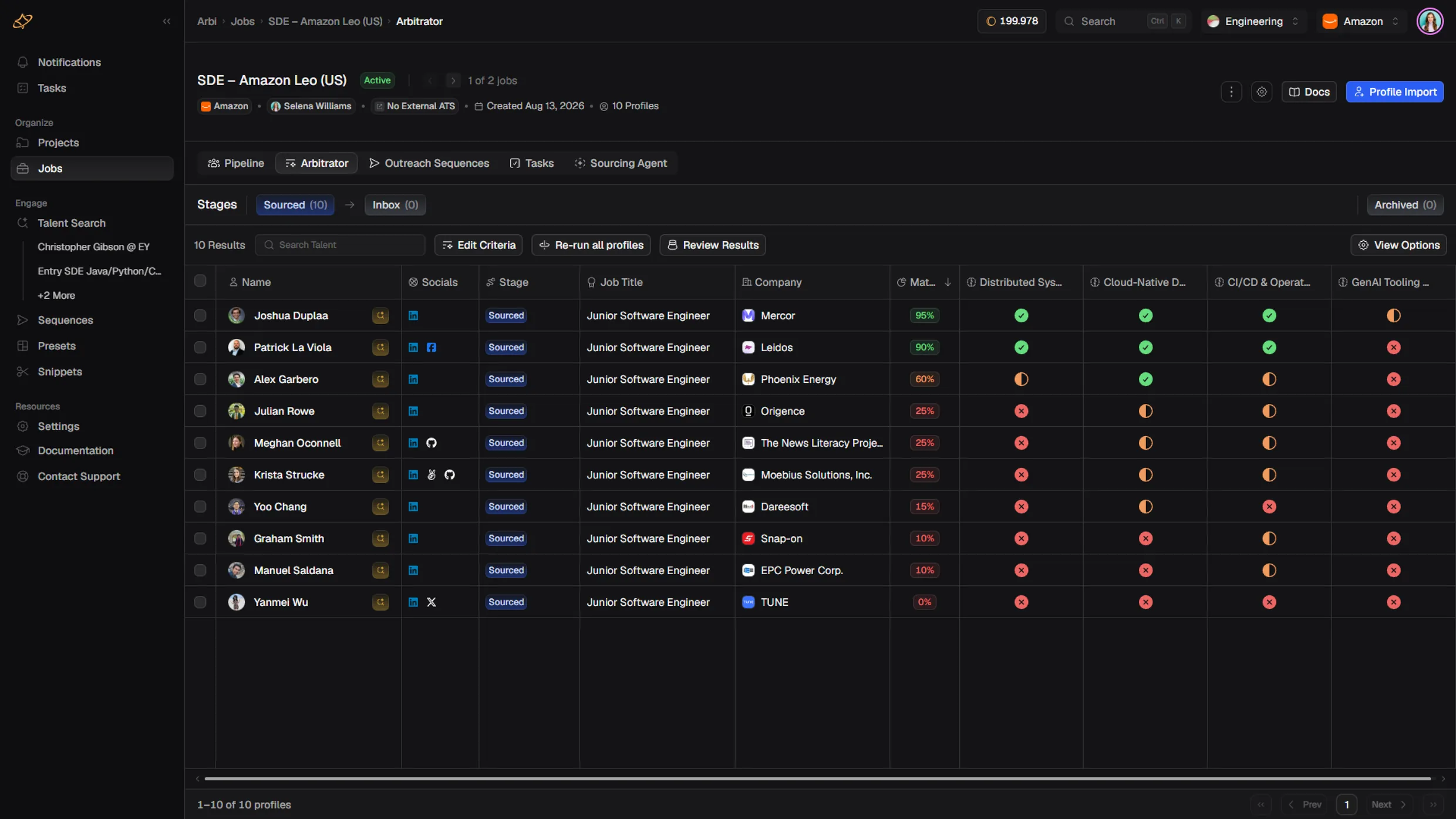
Criteria applied, evidence read, verdict reached, kept per candidate and per requisition from day one.
Clearance and citizenship requirements screen at the front of the funnel, not in the third interview.
The reading and the record-keeping that made regulated hiring slow now run in minutes, with nothing waived.

“We were not short of applicants. We were short of a way to say, consistently and in writing, what a strong one looked like. Once that existed, the reading stopped being the job and the judgement became the job.”
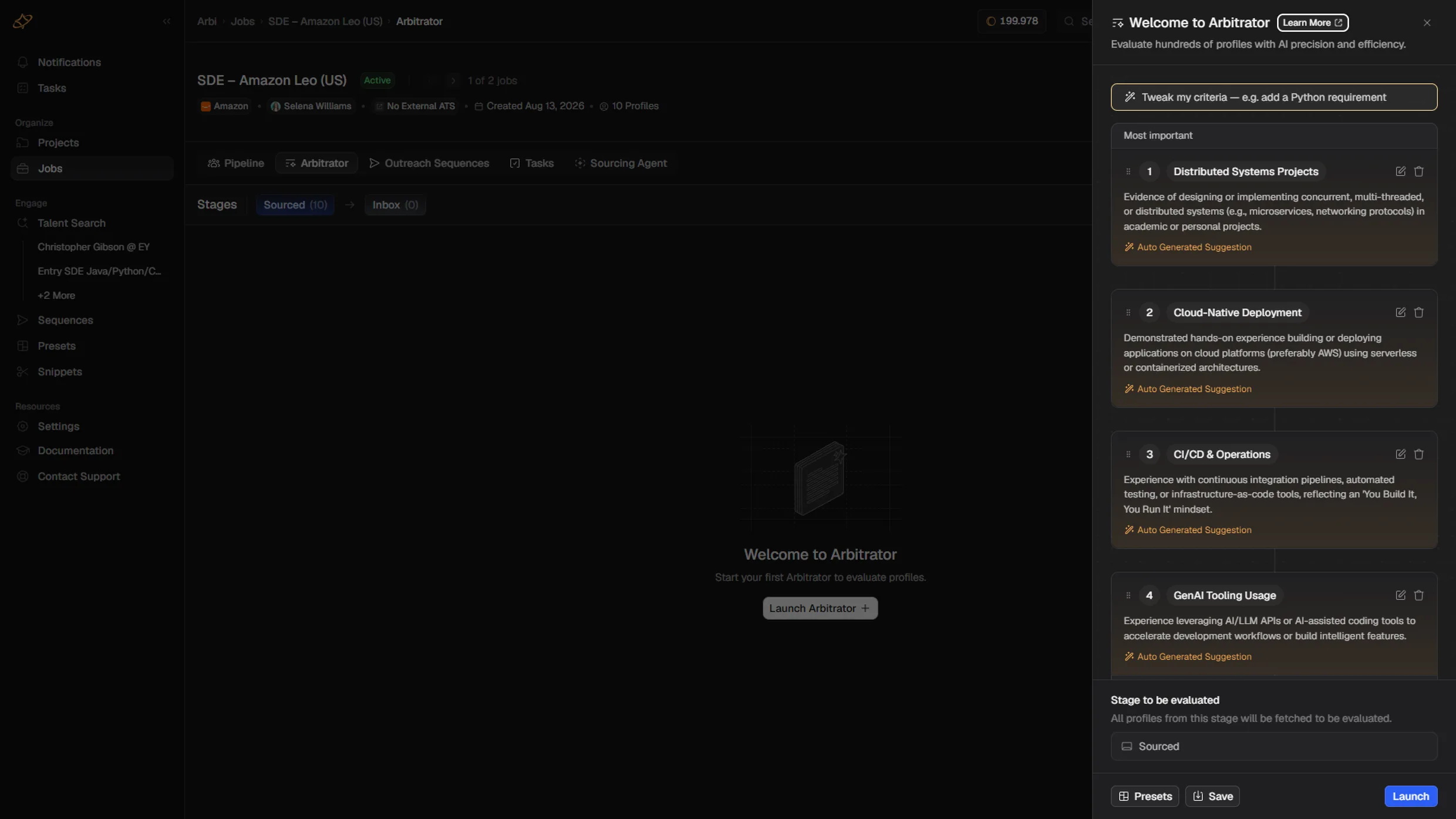
Clearance levels, certifications, and eligibility rules live on the requisition and screen every candidate the same way.
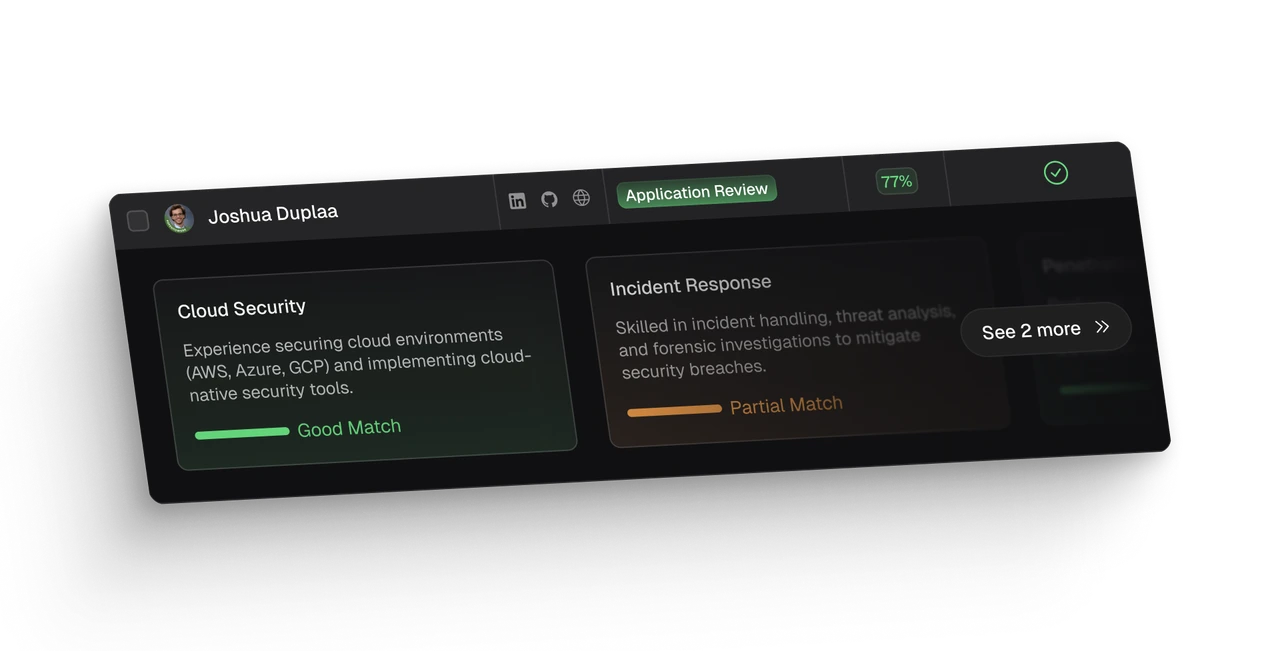
Each decision carries the lines it was based on, which is the difference between an audit finding and an audit passing.
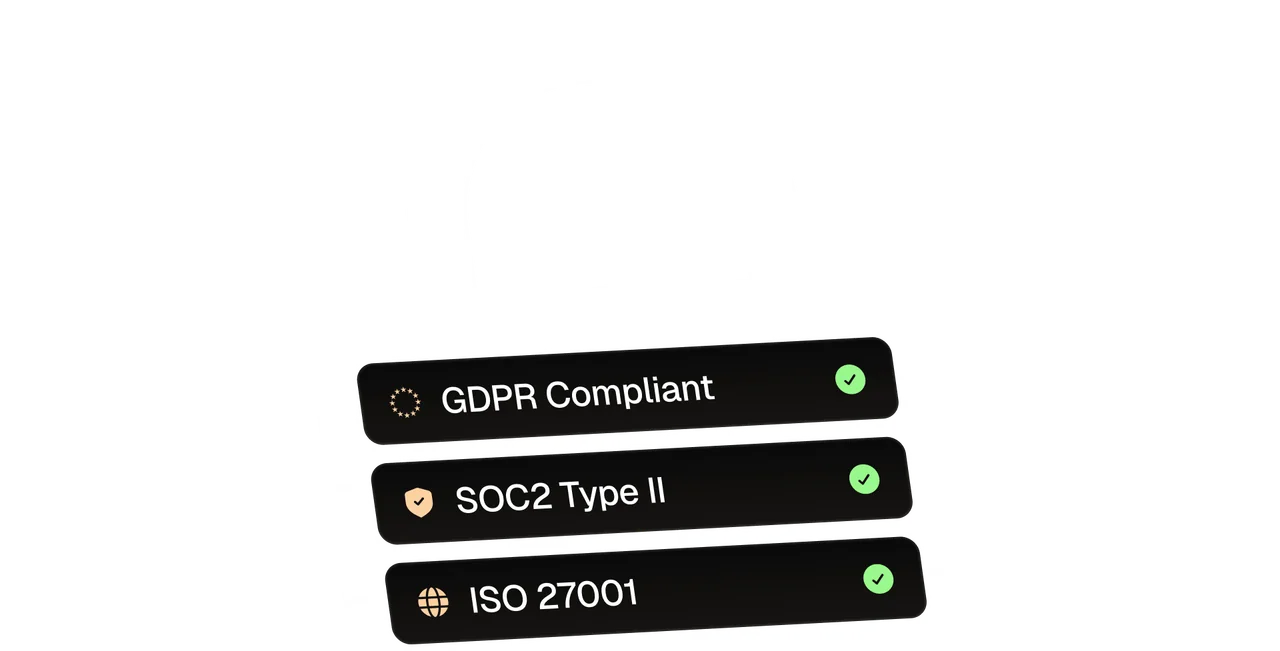
SOC 2 Type II, ISO 27001, and GDPR, with the reports and data handling documentation your security review will ask to see.
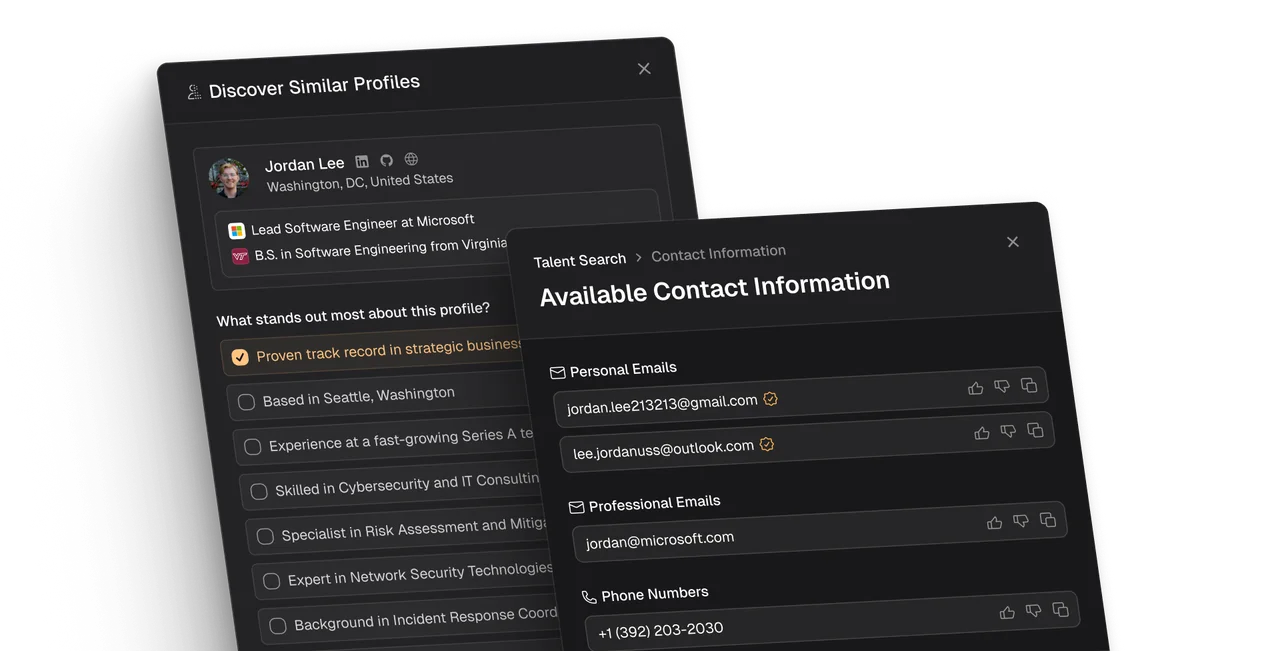
Personal and work emails plus direct numbers, verified before outreach, for the candidates who never check a job board.







Connect Arbi to your existing stack with 50+ integrations built for modern hiring workflows.





Requirements like clearance level, citizenship, or certification are written criteria like any other, so ineligible candidates are surfaced as such before anyone spends an interview slot finding out. The requirement and the check are both on the record.
Every screening verdict records the criteria applied, the evidence read, and the outcome, per candidate and per requisition. When an audit or a records request arrives, the answer is a report rather than a reconstruction.
Arbi applies the same written bar to every applicant and documents that it did, which is exactly what a merit process asks for. Your process stays your process; Arbi makes it consistent and provable.
Workspaces are isolated per account with role-based access, and data handling is documented for your security review. Our team supports procurement and security questionnaires directly.
Yes. Each requisition carries its own criteria and its own reviewers, so a staffing contractor and an internal HR team can work the same pipeline with the same bar and one record of decisions.
Annual seats with pooled credits, quotable in the format your procurement process expects. A quiet quarter does not strand budget, because credits pool across the account rather than per user.