Recruiting, for as long as we've known it, has followed an all-too-familiar formula: post a job, wait for applicants, review resumes, repeat.
But something has changed. The best candidates aren't flooding job boards anymore. And the data proves it.
Today, the strongest talent are already employed, selective, and rarely applying to roles the traditional way. If your hiring strategy still depends heavily on inbound applications, you're likely missing the majority of high-quality candidates.
So where are they hiding? Let's break it down.
The Shift: From Active to Passive Talent
The talent market has fundamentally changed in the past decade. Not long ago, job boards were the primary way people found work. A candidate would lose their job, or decide it was time for a change, and they'd start checking Indeed, Monster, or the classifieds. Companies posted roles, candidates applied, interviews happened.
That model still exists. But it's no longer where the best hiring happens. Today, top performers rarely need to search. They're already employed, often thriving in their current roles. They're not browsing job boards on their lunch break. They're not updating professional profiles with "open to work" badges.
But here's the thing: they're still moveable. The right opportunity, presented at the right time, with the right approach, can get their attention. It just won't happen through a job posting.
The Myth of the "Active Job Seeker"
Most recruiting workflows are built around the idea that great candidates are actively looking. In reality, top performers often aren't applying. Many don't update resumes regularly. Some avoid job boards entirely. Others are open to the right role but they're not searching.
These are passive candidates, and they make up a huge portion of the talent market. Industry estimates put up to 70% of the global workforce in that category. That means only a small fraction of talent is visible through traditional job postings. And that 70%? They're not unemployed or underperforming. They're the people currently driving results at other companies. The engineers shipping features. The designers leading projects. The operators making things run.
If your recruiting strategy only reaches the 30% who are actively looking, you're fishing in a much smaller pond than you realize.
Why Job Boards Miss Great Talent
Job boards still have value, but they come with limitations:
- They capture active searchers, not selective talent. High performers rarely mass-apply. They move when approached with the right opportunity.
- Competition is high. The same candidates are being contacted by dozens of recruiters.
- Sorting through applications doesn't always surface the best fit. Just the most available.
- Job boards are reactive, not proactive. You're waiting for talent instead of finding it.
The result is that job boards give you access to people who need a job right now. But they don't necessarily give you access to the people you actually want to hire.
Where the Best Candidates Actually Are
Great candidates are often:
- Growing in their current roles
- Networking quietly
- Building skills instead of job hunting
Keep in mind, these candidates are still open to compelling outreach. They're visible across professional platforms and digital footprints. They exist in large numbers, but they require discovery, not just posting.
So how do you find them?
1. GitHub, Stack Overflow, and Technical Communities
For technical roles, the best candidates are often the ones actively contributing to open source projects, answering questions on Stack Overflow, or maintaining repositories on GitHub. These platforms show you what someone can actually do, not just what their resume says they can do. A developer with 500+ contributions to a popular open source project is visible, assessable, and almost certainly not refreshing Indeed every morning.
2. Dribbble, Behance, and Portfolio Sites
Designers, creatives, and content professionals live on platforms where they showcase work. Dribbble and Behance aren't job boards, they're talent showcases.
The best candidates here are getting inbound messages constantly. But most of those messages are generic. The ones that reference specific work, understand the candidate's style, and connect it to a relevant opportunity? Those get responses.
3. Industry-Specific Communities
Product managers hang out on Product Hunt and Mind the Product. Developers frequent Hacker News and niche Slack communities. Designers engage on Designer News and Twitter (now X). Sales professionals network on public professional platforms and in private groups. These aren't job search platforms. They're professional communities. But they're full of talented people who are one good conversation away from considering a move.
4. Professional Networks (But Not the Job Board Part)
Public professional networks are still one of the best places to find passive candidates. But the value isn't in posting jobs and waiting for applications. The value is in search. Advanced filters. Boolean strings. Identifying people with the right skills, in the right geography, with the right career trajectory. Then reaching out directly. Most people on those networks aren't actively job searching. But most are open to hearing about interesting opportunities.
5. Your Own ATS
One of the most overlooked sources of passive talent is your own database. Past applicants who were strong but didn't get hired. Silver medalists who came close. People who applied 18 months ago when you didn't have the right role, but who have since gained more experience. These candidates already showed interest in your company. They're familiar with your brand. And they're far warmer than cold outreach to strangers.
6. Referrals and Alumni Networks
Your current employees know talented people. Your former employees know where they went next. The best candidates often come through trusted networks. Not because they were actively searching, but because someone they respect reached out and said "you should talk to this team." Referral programs work. Alumni networks work. The key is making it easy for people to connect you with talent they know.
How to Actually Reach Passive Candidates
Finding passive candidates is one thing. Getting them to respond is another.
Here's what doesn't work: generic templates. Mass outreach. Messages that start with "I came across your profile and think you'd be a great fit."
Here's what does work:
- Personalization that shows you actually looked Reference specific work. Mention a project they led. Show that you understand what they've built and why it's relevant.
- Lead with opportunity, not "we're hiring" Passive candidates aren't motivated by the fact that you have an opening. They're motivated by the chance to work on something interesting, with people they respect, on problems that matter.
- Timing matters Passive candidates are more receptive at certain moments. After they ship a big project. After a company milestone. After a funding round or acquisition at their current company. Timing isn't everything, but it's not nothing.
- Make it easy to say yes to a conversation Don't ask for a resume. Don't ask them to apply. Just ask for 15 minutes to learn more about what they're working on. Lower the barrier. Make it feel like a conversation, not a transaction.
Common Mistakes When Sourcing Passive Talent
Even teams that understand the value of passive sourcing often make predictable mistakes:
- Mistake 1: Spray and Pray Outreach Sending 500 identical cold messages might get you a 2% response rate. But the people who respond are often the least selective, not the most talented. Quality over quantity wins here.
- Mistake 2: Ignoring Internal Mobility Your current employees are passive candidates too. Someone in customer success might be a great fit for a product role. Someone in sales might want to move into operations. Before you source externally, make sure you're not overlooking talent you already have.
- Mistake 3: Giving Up After One Message Passive candidates are busy. They might not see your first message. Or they see it but don't have time to reply. A well-timed follow-up (not pushy, just a gentle nudge) often makes the difference.
- Mistake 4: Treating Passive Sourcing Like a One-Time Campaign The best talent teams don't just source when they have an open role. They're always building relationships. Always mapping talent markets. Always staying connected to strong candidates, even when there's no immediate fit.
Technology Is Changing Talent Discovery
Modern hiring leaders are shifting from inbound recruiting to intelligence-driven sourcing.
AI and data-driven tools are redefining how recruiters find candidates. Instead of manual searches across dozens of platforms, AI sourcing technology can now:
- Surface qualified candidates quickly
- Identify strong matches based on role criteria
- Prioritize candidates with higher fit attributes
- Automate outreach coordination
- Reduce screening bottlenecks overall
The result? Recruiters spend more time connecting with the right people and less time digging for them. Personalized outreach that makes candidates feel like people, not templates.
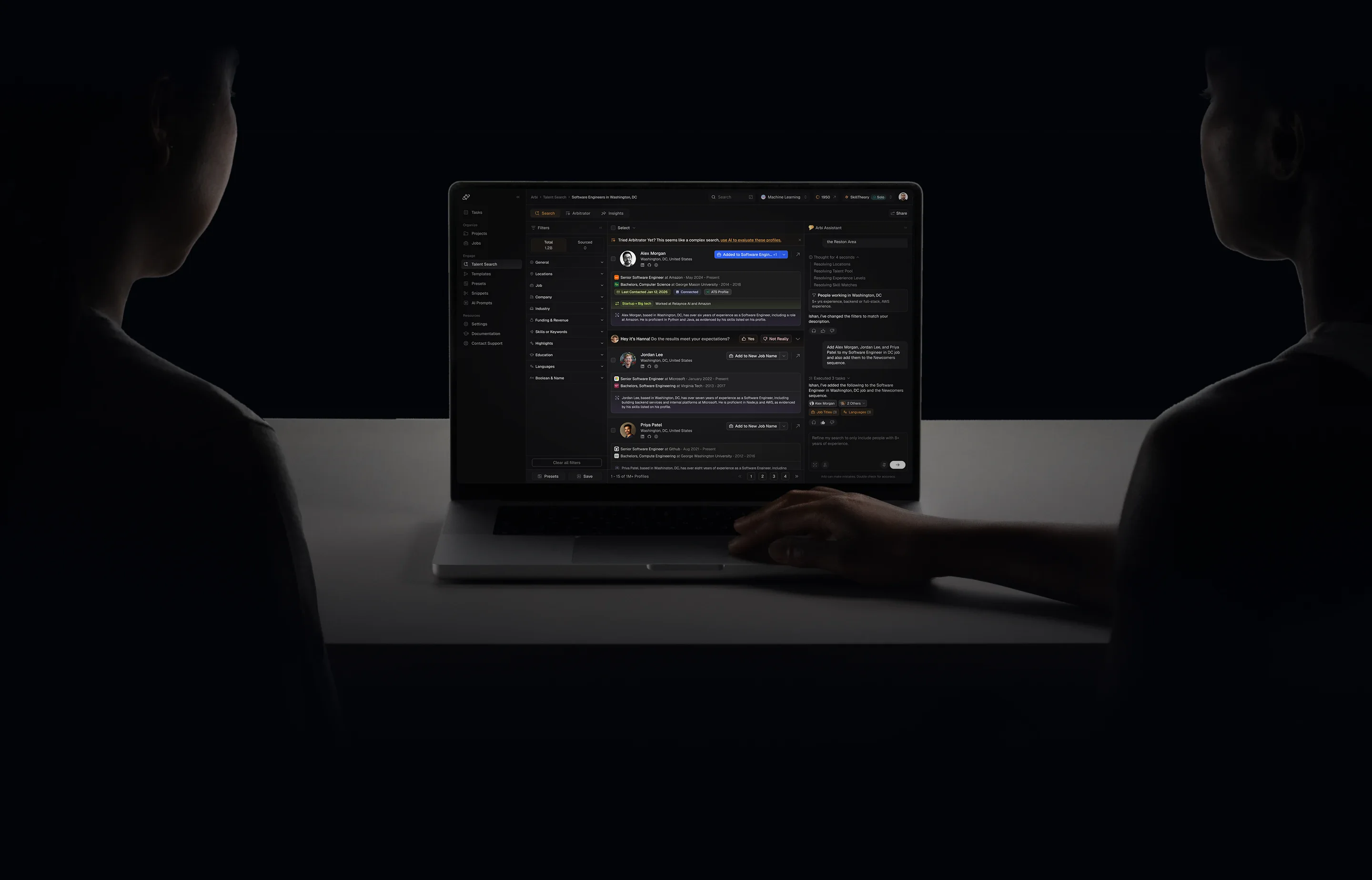
Platforms like Neuroscale Arbi are designed specifically for this shift. Instead of waiting for applications, teams can continuously map talent markets, evaluate candidates based on real signals, and run personalized outreach at scale. The goal isn't to replace recruiters but to give them back their time for the parts of hiring that actually matter: building relationships, selling opportunities, making great hires.
The Business Case for Passive Sourcing
Beyond the obvious benefit (access to better candidates), there are other reasons why teams are shifting to passive sourcing:
- Reduced time to hire When you're not waiting for the right person to apply, you can move faster. Proactive sourcing means you're building pipelines before roles open, not after.
- Higher quality hires Passive candidates tend to be more selective. They're not applying to 20 roles. If they move, it's because the opportunity genuinely excited them. That often translates to better retention and performance.
- Less competition When you post a job, you're competing with every other company posting similar roles. When you reach out directly to a passive candidate, the conversation is one-to-one. You're not just another applicant in their inbox, you're a potential opportunity they're evaluating on its own merits.
- Better employer brand Thoughtful, personalized outreach reflects well on your company. Even if a candidate isn't ready to move now, a positive interaction can turn them into a future applicant or referral source.
Final Thought
If your best hires aren't coming from job boards, that's not a coincidence. It's a trend.
The question isn't whether talent exists. It's whether your team can find it.
As hiring grows more competitive, the organizations that succeed will be those that look beyond traditional channels and embrace smarter sourcing.
Want to Reach Candidates Beyond Job Boards?
See how Neuroscale helps teams surface hidden talent and turn passive candidates into warm conversations. Email us: [email protected]. No lengthy demos, no sales theater. Just a clear look at how modern sourcing actually works.
About Neuroscale AI: Neuroscale builds Arbi, an AI-powered platform designed to discover and engage passive talent at scale. The company believes the best candidates aren't waiting on job boards, they're already working somewhere else. Learn more at neuroscale.ai.