Across the U.S., traditional talent sourcing is slowly but surely breaking down.
Not because companies can't find candidates.
But because they can't see them.
Every hiring team now has access to massive pools of talent through multiple channels: job boards, inbound funnels, professional networks, referrals, agencies, outbound tools. A corporate recruiter seat on a major professional network can run into five figures... candidates are not scarce. Clarity is.
Industry research on recruiting in 2025 keeps landing on the same point: 73% of US talent teams report being overwhelmed by candidate volume, not candidate scarcity. The problem isn't access. It's interpretation.
Why Access No Longer Equals Advantage
The winning teams in the U.S. right now aren't the ones with the biggest databases or the most recruiter spend. They're the ones with the best tools to actually understand what they're looking at. Because when every company is sourcing from the same places, advantage stops coming from access. It starts coming from interpretation.
Modern talent sourcing is moving away from keyword and boolean search, away from static profiles and sifting through AI-generated resumes that all say the same thing. Day by day, the talent sourcing market is leaning further toward career momentum and role-specific context.
Recruiters need to stop moving from screen to screen asking "Does this resume fit the job description?" And start asking "Who is actually building relevant things right now?" Or "Who is growing in the direction this role requires?" Who has the patterns, not just the words?
This shift is happening nationwide because the volume problem has already been solved. But recruiters and hiring managers aren't asking the right questions, and most don't know where to start looking for the answers.
Most U.S. teams aren't lacking candidates. They're drowning in them. And everyone knows the cost of a bad hire. Pipelines don't create clarity. Hundreds of applications don't create qualifications. They create work. More work, for everyone involved. So the teams hiring best across the United States aren't doing more sourcing. The teams finding your best candidates before they can even apply are changing what sourcing actually means in today's era. They're treating it less like list building and more like analysis. Less about finding people, and more about understanding them.
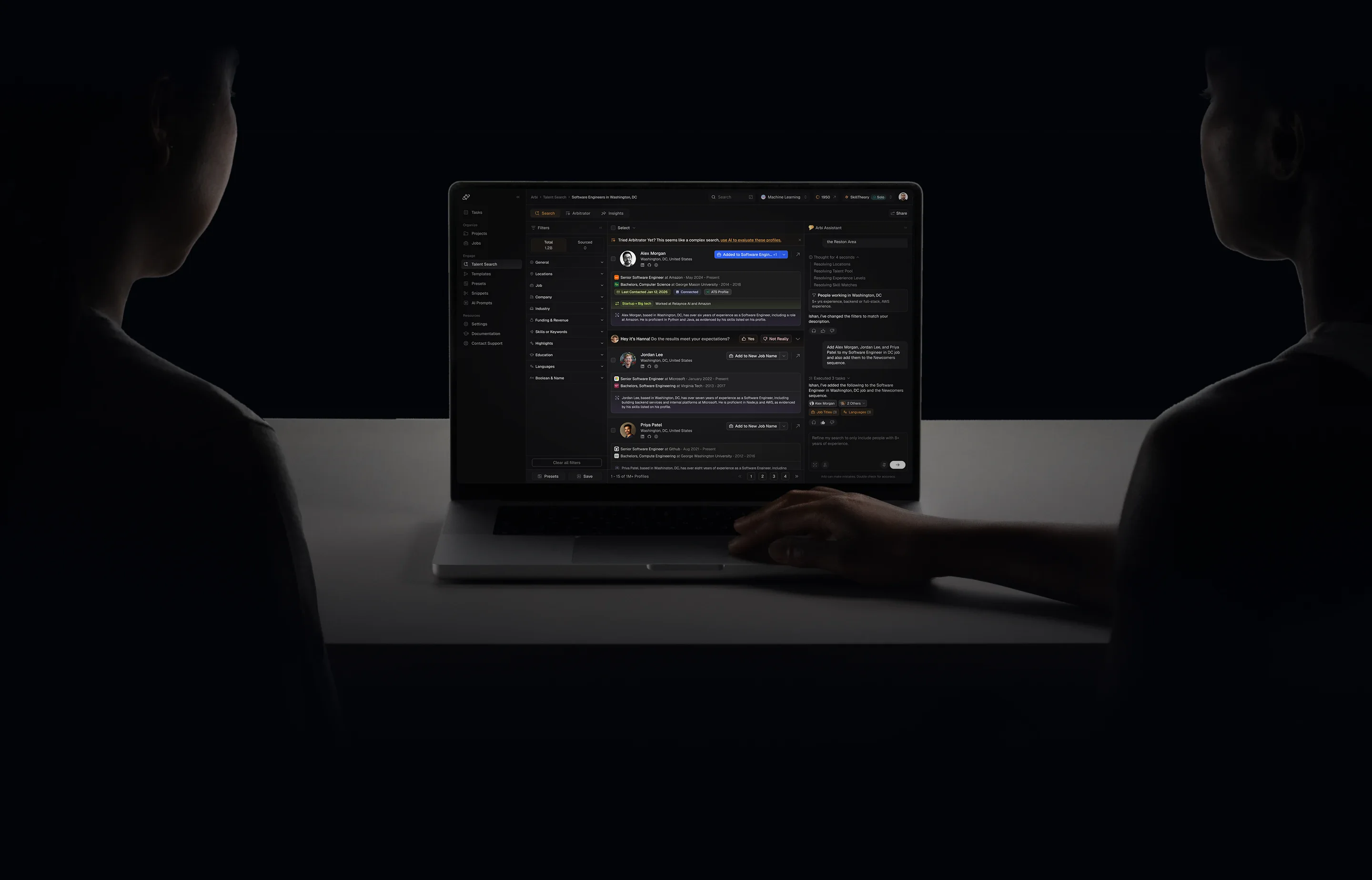
That's the layer Arbi is designed to power.
Not just another way to collect candidates. But a way to turn massive talent pools into structured, interpretable shortlists teams can actually use. Because the future of talent sourcing in the U.S. isn't bigger piles. It's clearer ones.
See how it works: Email us at [email protected] for a quick walkthrough. No lengthy demos, no sales theater, just your real data, analyzed in real time, so you can see the difference for yourself. Because hiring shouldn't feel this hard.
About Neuroscale AI: Neuroscale builds Arbi, an AI evaluation tool designed to turn talent pools into structured shortlists. The company believes the future of sourcing isn't about just access, it's about interpretation. Learn more at neuroscale.ai.