The best AI recruiting software in 2026 includes platforms like Metaview, HireEZ, Paradox, Gem, Eightfold, Workable, and Arbi by Neuroscale AI, each designed to automate different stages of the hiring process from sourcing to screening to scheduling. The right choice depends on your specific bottleneck, whether that's high-volume candidate screening, outbound sourcing, or collapsing a fragmented recruiting stack into a single system. This guide breaks down the top AI recruiting platforms with honest assessments of what each actually does, where they fall short, and which teams they fit best.
Choosing AI recruiting software has become more complicated as the market has matured. Most platforms marketed as "AI recruiting software" are traditional applicant tracking systems with AI features layered on top—not purpose-built AI solutions. Understanding this distinction is critical before you evaluate vendors, compare pricing, or commit to implementation timelines that could stretch longer than expected.
What Is AI Recruiting Software (and What Isn't)?
AI recruiting software uses artificial intelligence and automation to handle tasks that traditionally required manual recruiter effort—sourcing candidates, screening resumes, scheduling interviews, generating job descriptions, and evaluating talent against role-specific criteria.
The key distinction is where AI actually changes hiring outcomes versus where it simply speeds up existing workflows. True AI recruitment tools learn from your hiring patterns, surface candidates you wouldn't have found manually, and make decisions (or recommendations) based on data rather than keyword matching alone.
What isn't AI recruiting software: a traditional ATS with a chatbot bolted on, or a resume parser that uses basic keyword filtering. Many vendors have rebranded legacy products as "AI-powered" without fundamentally changing how the technology works. Before evaluating any platform, ask where the AI actually operates and what decisions it influences.
This matters because recruiting burnout is a systems problem, not a human problem. When recruiters spend hours on repetitive tasks that AI could handle, they burn out faster and make worse hiring decisions. The right AI recruitment solution removes that friction—not by replacing recruiters, but by handling the work that shouldn't require human judgment in the first place.
How to Choose the Right AI Recruitment Platform for Your Team
The right AI recruiting platform depends on three factors: your company size, your hiring volume, and your specific bottleneck in the recruiting process.
Identify your primary bottleneck first. AI recruiting tools specialize in different stages of the hiring funnel. Some excel at sourcing passive candidates. Others focus on screening high volumes of applicants. A few handle scheduling and interview logistics. And a smaller set—like Arbi—collapse the entire fragmented recruiting stack into one system.
Match the tool to your team structure. Enterprise HR teams with dedicated sourcers, recruiters, and coordinators may benefit from specialized point solutions. Scaling startups with limited headcount need platforms that handle multiple functions without requiring a full recruiting team to operate them.
Evaluate integration requirements. If you already have an ATS you're committed to, you need AI tools that integrate cleanly. If you're building your stack from scratch, you have more flexibility to choose an all-in-one ai-powered recruitment platform.
Understanding how to build a recruiting tech stack before you buy prevents the common mistake of purchasing overlapping tools that create more complexity than they solve. The goal is fewer systems, not more—especially when each additional tool requires its own onboarding, maintenance, and subscription cost.
Best AI Recruiting Tools for 2026: Full Breakdown
The leading AI recruitment companies in 2026 span specialized point solutions and comprehensive platforms. Here's what each actually does and who it fits best.
Metaview focuses on AI-powered interview intelligence. It automatically generates interview notes and summaries, freeing recruiters from manual documentation. Best for teams that conduct high volumes of interviews and want to capture structured feedback without slowing down the process. Falls short if your bottleneck is sourcing or screening rather than interviewing.
HireEZ specializes in AI-powered outbound sourcing. It searches across multiple platforms to find passive candidates and automates initial outreach sequences. Best for teams with dedicated sourcers who need to fill pipelines faster. Less useful if you already have strong inbound application flow.
Paradox (Olivia) offers conversational AI for candidate engagement. Its chatbot handles screening questions, scheduling, and candidate communication at scale. Best for high-volume hiring teams—retail, hospitality, healthcare—where speed and candidate experience matter most. May feel impersonal for executive or specialized technical roles.
Gem combines sourcing, CRM, and analytics into a unified platform. It tracks candidate relationships over time and provides pipeline visibility. Best for teams that nurture talent pools and hire repeatedly from the same candidate networks. Requires consistent usage to realize full value.
Eightfold uses deep learning for talent matching and internal mobility. It analyzes skills and career trajectories to match candidates to roles. Best for large enterprises focused on skills-based hiring and internal talent development. Implementation complexity makes it less practical for smaller teams.
Workable provides an AI-powered recruiting platform designed for HR teams who want to automate sourcing and screen candidates faster. It offers a broad feature set including job posting, applicant tracking, and AI-assisted candidate recommendations. Best for mid-market companies that want a single system without enterprise complexity.
GoodTime automates interview scheduling with AI that coordinates across multiple calendars and time zones. Best for teams where scheduling logistics create significant delays in the hiring process. Narrowly focused—you'll still need other tools for sourcing and screening.
Fetcher uses AI to screen candidates when applicant volume is high and switches to outbound sourcing when talent is harder to find. This flexibility makes it useful for teams with variable hiring needs. Best for companies that experience seasonal hiring fluctuations.
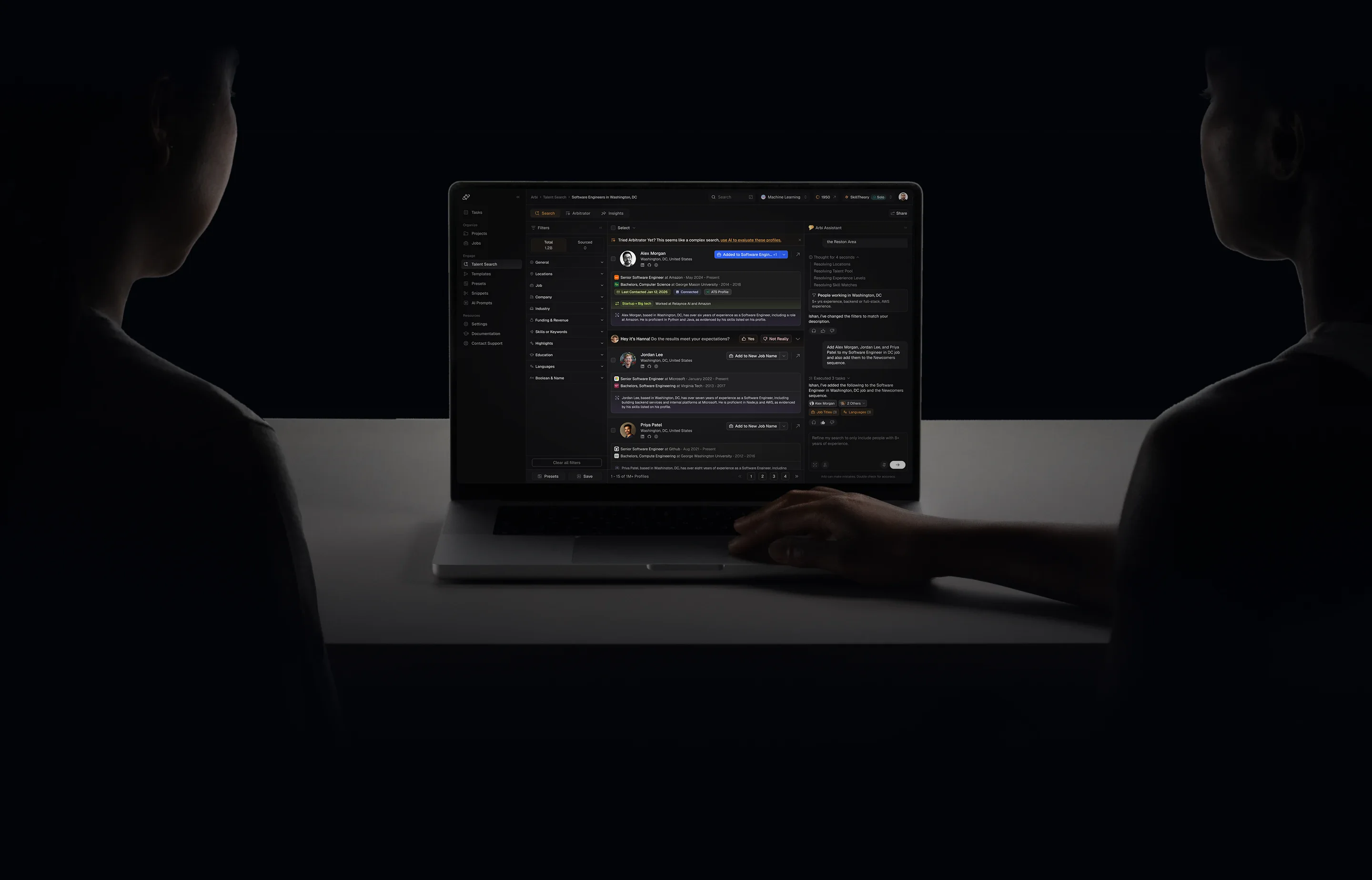
Arbi by Neuroscale AI addresses the core pain point that every competing article identifies: the fragmented recruiting stack where teams use one tool for sourcing, another for outreach, and another for evaluation. Arbi collapses these functions into a single AI-native system. Best for teams that want to reduce tool sprawl and operate with a full recruiting solution rolled into one platform.
For a deeper look at additional vendors, see our guide to 10 leading AI recruiting companies to transform hiring in 2026.
AI Recruiting Software Comparison: Features, Pricing, and Limitations
Comparing AI recruiting platforms requires looking beyond feature lists to understand total cost of ownership, implementation timelines, and real-world limitations.
| Platform | Primary Function | Best For | Pricing Model | Key Limitation |
|---|---|---|---|---|
| Metaview | Interview intelligence | High-volume interview teams | Per-seat subscription | Narrow focus on interviews only |
| HireEZ | Outbound sourcing | Teams with dedicated sourcers | Tiered by usage | Requires existing ATS integration |
| Paradox | Conversational AI | High-volume, hourly hiring | Custom enterprise pricing | Less suited for specialized roles |
| Gem | Sourcing + CRM | Relationship-driven recruiting | Per-seat subscription | Value requires consistent usage |
| Eightfold | Talent matching | Large enterprises | Enterprise contracts | Complex implementation |
| Workable | All-in-one ATS + AI | Mid-market companies | Tiered subscription | AI features less advanced than specialists |
| GoodTime | Scheduling automation | Teams with scheduling bottlenecks | Per-seat subscription | Single-function tool |
| Fetcher | Adaptive sourcing/screening | Variable hiring volume | Usage-based | May require supplementary tools |
| Arbi | Unified recruiting stack | Lean teams, scaling companies | See pricing | Newer entrant, smaller customer base |
Pricing transparency varies significantly. Some vendors publish clear per-seat or per-job pricing. Others require sales conversations to get quotes, which typically signals enterprise-level pricing that may not fit startup budgets. Understanding the true cost of AI recruiting tools in 2026 means accounting for implementation fees, training time, integration costs, and the productivity loss during transition periods.
Limitations matter as much as features. Every platform has constraints. Point solutions require you to maintain multiple subscriptions and manage data flow between systems. All-in-one platforms may not excel at any single function. The question isn't which tool is best overall—it's which tool best addresses your specific hiring bottleneck without creating new problems.
Common Pitfalls When Evaluating AI-Powered Hiring Platforms
Most teams make predictable mistakes when selecting AI recruiting software. Avoiding these pitfalls saves months of wasted implementation time and thousands in subscription costs.
Buying features you won't use. Enterprise platforms offer extensive capabilities, but if your team only needs better sourcing, you're paying for complexity that slows adoption. Start with your actual workflow and work backward to required features—not the other way around.
Underestimating integration complexity. AI recruitment tools that don't integrate cleanly with your existing ATS create data silos and manual workarounds. Before signing any contract, map exactly how candidate data will flow between systems and who will maintain those integrations.
Ignoring change management. The best AI recruiting software fails if recruiters don't use it. Adoption requires training, workflow redesign, and often cultural shifts in how teams think about automation. Budget time for this—it's rarely as simple as vendors suggest.
Chasing AI hype over practical outcomes. Some platforms market sophisticated AI capabilities that sound impressive but don't translate to faster hires or better candidates. Ask vendors for specific metrics: How much does time-to-hire decrease? What's the quality-of-hire improvement? If they can't answer with data, be skeptical.
Building a fragmented stack. The most common mistake is accumulating multiple point solutions that each solve one problem while creating new coordination overhead. This is why many teams experience recruiting tech stack problems that make hiring harder, not easier. Consolidation often delivers more value than adding another specialized tool.
Failing to pilot before committing. Most vendors offer trials or pilot programs. Use them. Run real hiring workflows through the platform before signing annual contracts. What works in a demo may not work in your actual recruiting environment.
Find the Right AI Recruitment Solution with Arbi by Neuroscale AI
The AI recruiting software market in 2026 offers more options than ever—but more options doesn't mean easier decisions. The right platform depends on your team size, hiring volume, and whether you need a specialized tool or a unified system.
Neuroscale AI built Arbi specifically to address the fragmentation problem that plagues most recruiting teams. Instead of managing separate tools for sourcing, outreach, and evaluation, Arbi handles the full workflow in one AI-native platform. This approach reduces tool sprawl, cuts subscription costs, and lets lean teams compete for talent without expanding headcount.
If you're evaluating AI recruitment solutions, start by exploring Arbi's sourcing capabilities to see how it handles the top-of-funnel work that typically requires dedicated sourcers. For social proof on how teams are using the platform, visit their customer stories.
The best ai recruiting tools aren't the ones with the longest feature lists—they're the ones that solve your specific bottleneck without creating new complexity. Whether that's Arbi or another platform on this list, the goal is the same: hire better candidates faster with less manual effort.
Frequently Asked Questions
What is AI recruiting software?
AI recruiting software uses artificial intelligence to automate hiring tasks like sourcing candidates, screening resumes, scheduling interviews, and evaluating talent. Unlike traditional applicant tracking systems that rely on keyword matching, AI recruiting platforms learn from hiring patterns and make data-driven recommendations. The technology handles repetitive work so recruiters can focus on relationship-building and final hiring decisions.
How is AI recruiting software different from an ATS?
An applicant tracking system (ATS) organizes and tracks candidates through your hiring pipeline—it's primarily a database and workflow tool. AI recruiting software actively performs recruiting tasks: finding candidates, assessing fit, automating communication, and surfacing insights. Many teams use both, with AI tools feeding qualified candidates into an existing ATS. Some ai-powered recruitment platforms combine both functions into a single system.
Can AI recruiting software replace recruiters?
No. AI recruitment tools automate repetitive tasks like initial screening, scheduling, and candidate sourcing, but they don't replace the human judgment required for final hiring decisions, candidate relationship-building, or complex negotiations. The best implementations free recruiters to spend more time on high-value activities rather than administrative work. Teams that adopt AI recruiting software typically don't reduce headcount—they increase hiring capacity per recruiter.
How much does AI recruiting software cost?
Pricing varies significantly by platform and model. Per-seat subscriptions typically range from $100 to $500 per user per month for mid-market tools. Enterprise platforms often require custom contracts starting at $25,000 to $100,000+ annually. Usage-based pricing charges per job posted, candidate sourced, or interview scheduled. Always account for implementation fees, training costs, and integration expenses beyond the base subscription price.
Does AI recruiting software help reduce bias in hiring?
AI recruiting software can reduce certain types of bias by standardizing evaluation criteria and removing identifying information during initial screening. However, AI systems can also perpetuate or amplify existing biases if trained on historical hiring data that reflects past discrimination. Responsible vendors audit their algorithms for bias and provide transparency into how decisions are made. Ask vendors specifically how they test for and mitigate algorithmic bias before purchasing.
What features should I look for in AI recruiting platforms?
The most important features depend on your bottleneck. For sourcing, look for AI that searches across multiple platforms and identifies passive candidates. For screening, prioritize tools that assess skills and fit rather than just keyword matching. For scheduling, choose platforms that coordinate across calendars automatically. For comprehensive needs, evaluate ai recruitment solutions that combine multiple functions to reduce tool sprawl. Integration with your existing systems is critical regardless of which features you prioritize.
How long does it take to implement AI recruiting software?
Implementation timelines range from days to months depending on platform complexity and integration requirements. Simple point solutions with minimal integration can be operational within one to two weeks. Comprehensive platforms requiring ATS integration, custom workflows, and team training typically take two to three months for full deployment. Enterprise implementations with complex requirements may extend to six months or longer. Always confirm implementation timelines and required resources before signing contracts.