Everything we shipped

Every change to Arbi, newest first. What is new, what got better, and what we broke and then fixed.

Currently onv2.18August 12, 2026
v2.18Latest
Screening
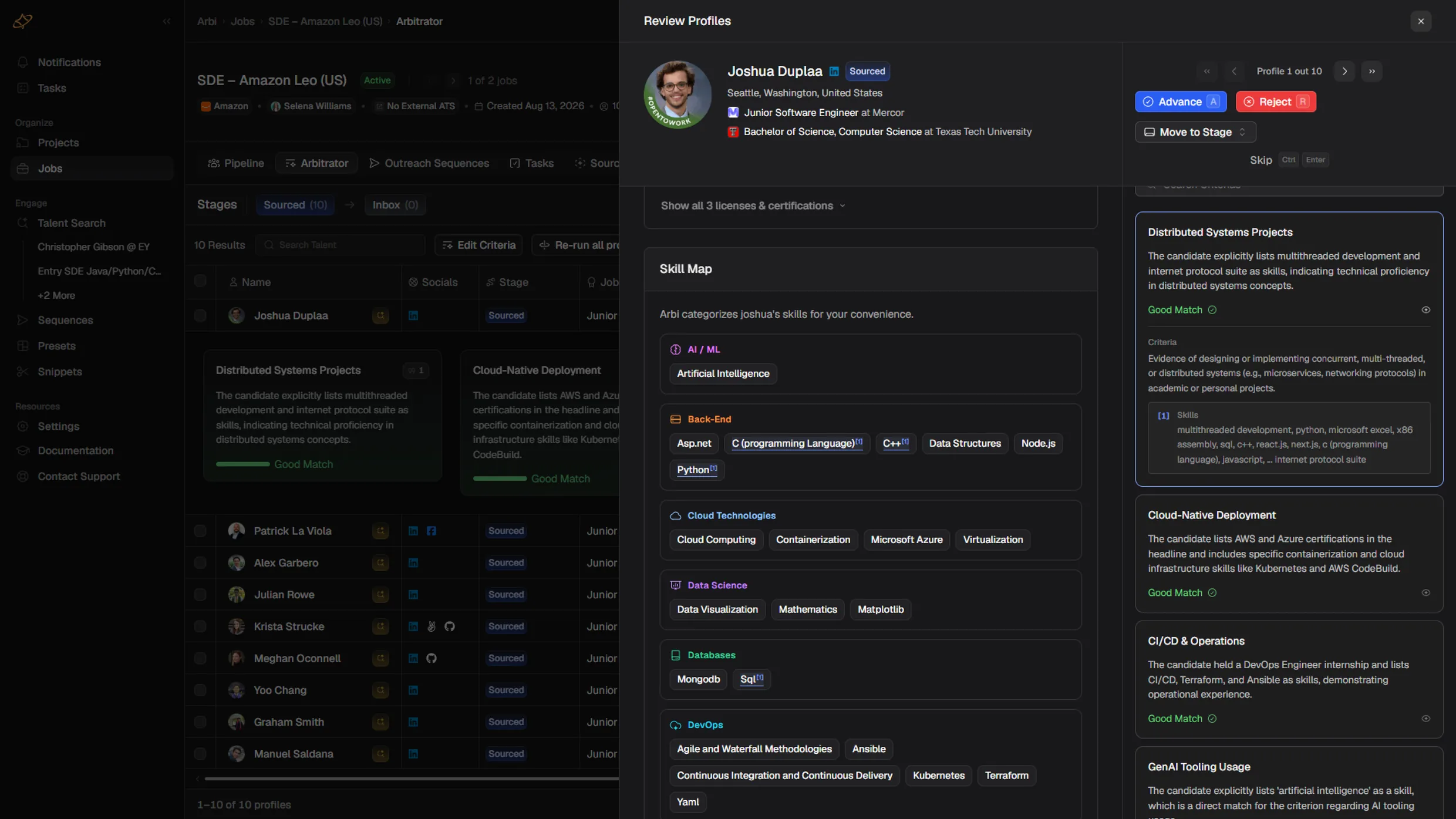
Skill maps on every shortlist

A shortlist now carries a map of where its strength actually sits, so you can see at a glance that eight of your top ten are strong on the same two criteria and thin on the third.

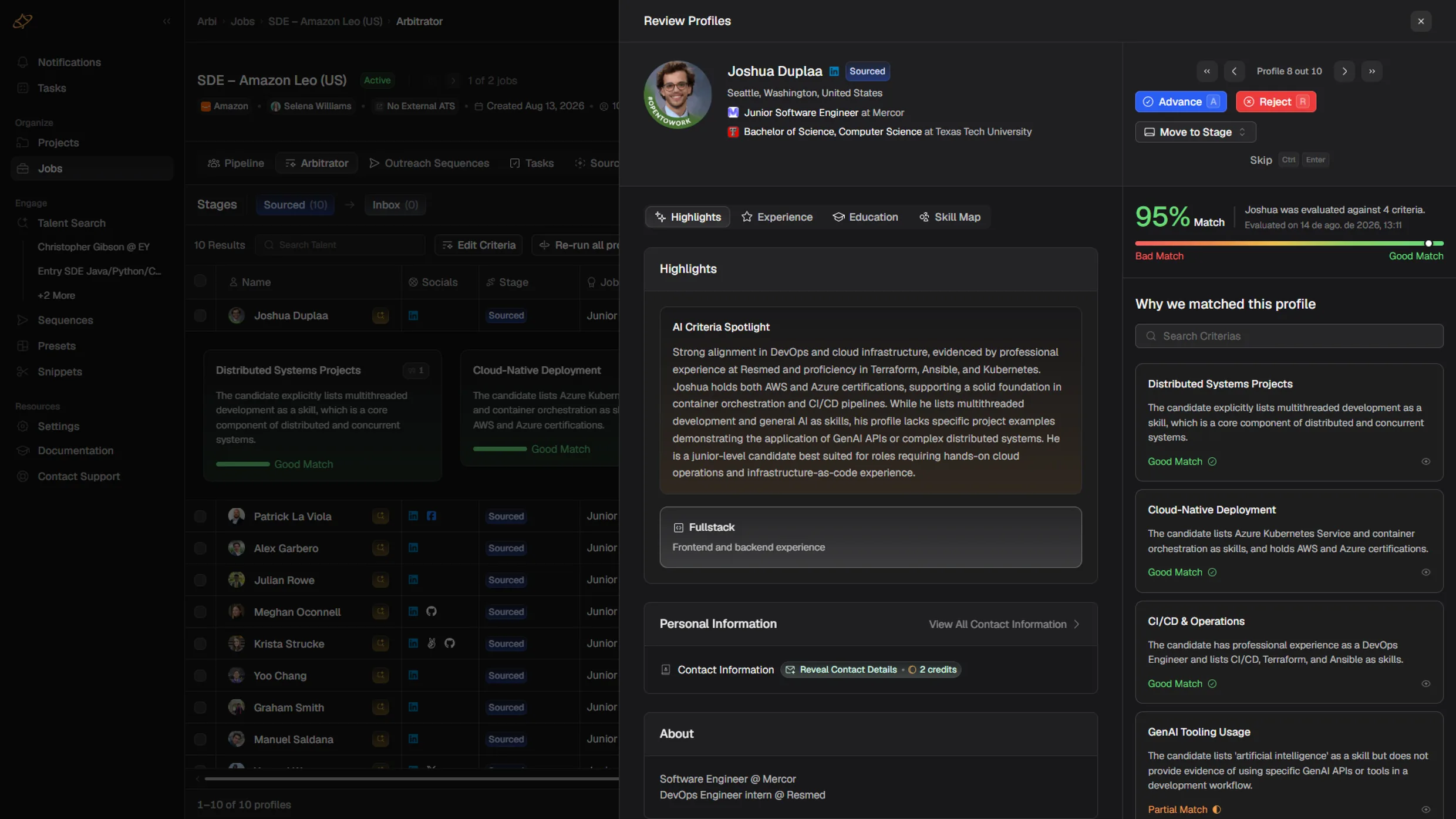
A skill map showing coverage across the criteria for a shortlist
  • NewSkill maps render for any stage with four or more scored profiles, with per-criterion coverage across the whole shortlist.
  • NewClicking a cell filters the stage to the candidates who evidenced that criterion.
  • ImprovedCriteria you marked as high importance are ordered first in every view that lists them, not just the review drawer.
  • FixedStages with more than 800 profiles no longer time out when a criterion is edited and the stage is re-run.
v2.17
Sequencing

Reply detection that understands a no

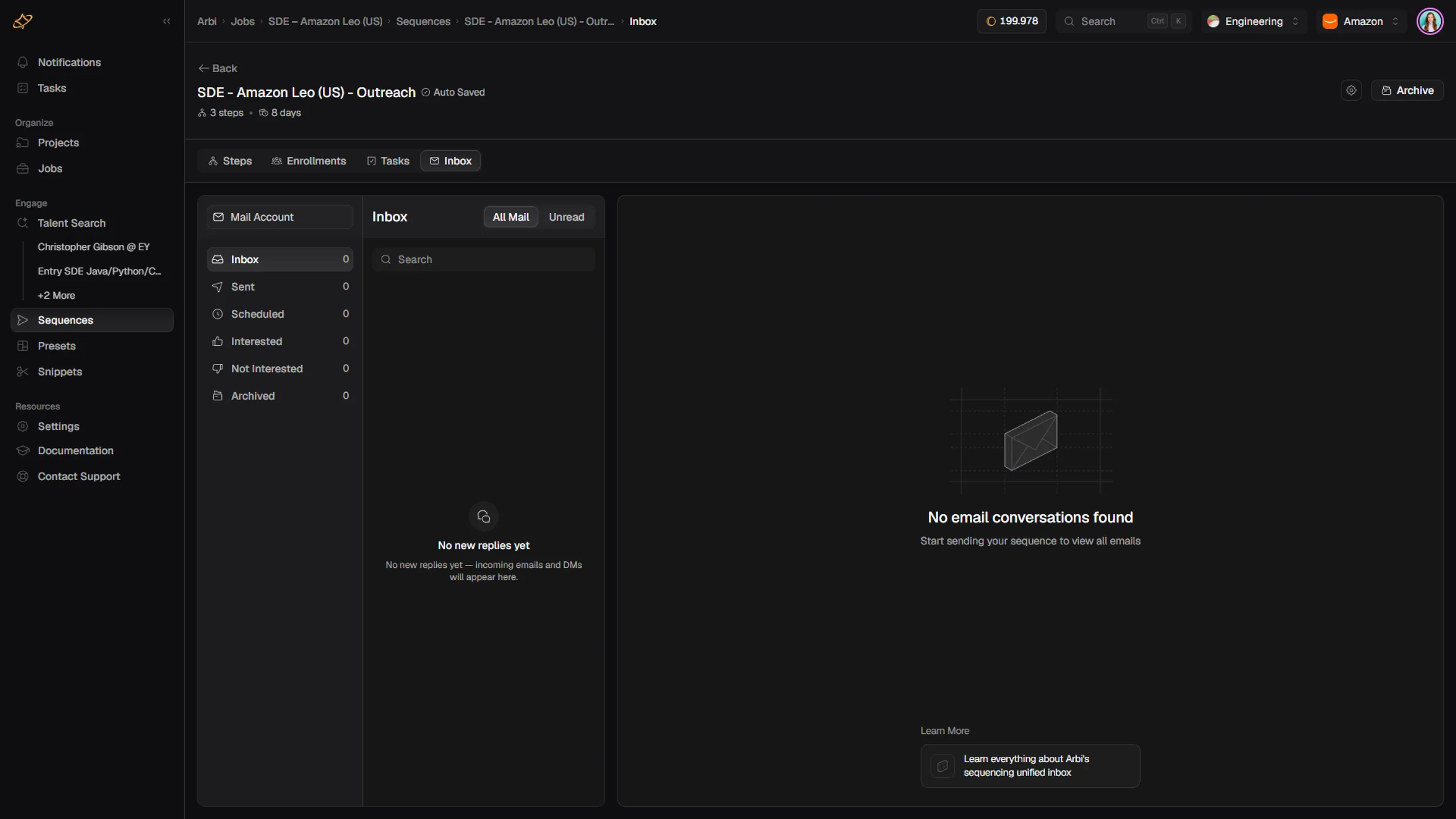
Out of office is not a reply, and neither is a polite decline that you still want counted separately. Sequences now classify what came back instead of only noticing that something did.

The sequencing inbox with replies grouped by how they were classified
  • NewReplies are classified as interested, declined, referred, or automatic, and each one stops the sequence differently.
  • NewA decline can write a follow-up date, which puts the candidate back in your queue rather than closing them out.
  • ImprovedOut of office replies no longer count against a step's reply rate in analytics.
  • FixedThreads with more than twenty messages now render the full history in the inbox instead of truncating at the tenth.
v2.16
Interviewing

Scorecards that fill themselves in

The interviewer's job is to agree or disagree with evidence, not to reconstruct an hour from four lines of handwriting. Recorded interviews now arrive as a scorecard with the passages already attached to each competency.

An interview scorecard with per-competency ratings and the quotes supporting them
  • NewCompetencies are matched to timestamped passages from the transcript, and every rating links back to what was said.
  • NewInterviewers can flag a competency as not covered, which surfaces it as a question for the next round.
  • ImprovedScorecard templates can be shared across a loop so every interviewer rates against the same anchors.
v2.15
Sourcing

Searches that remember what you meant

A good search brief takes real thought to write, and until now it evaporated the moment you closed the tab. Searches are saved objects that keep running.

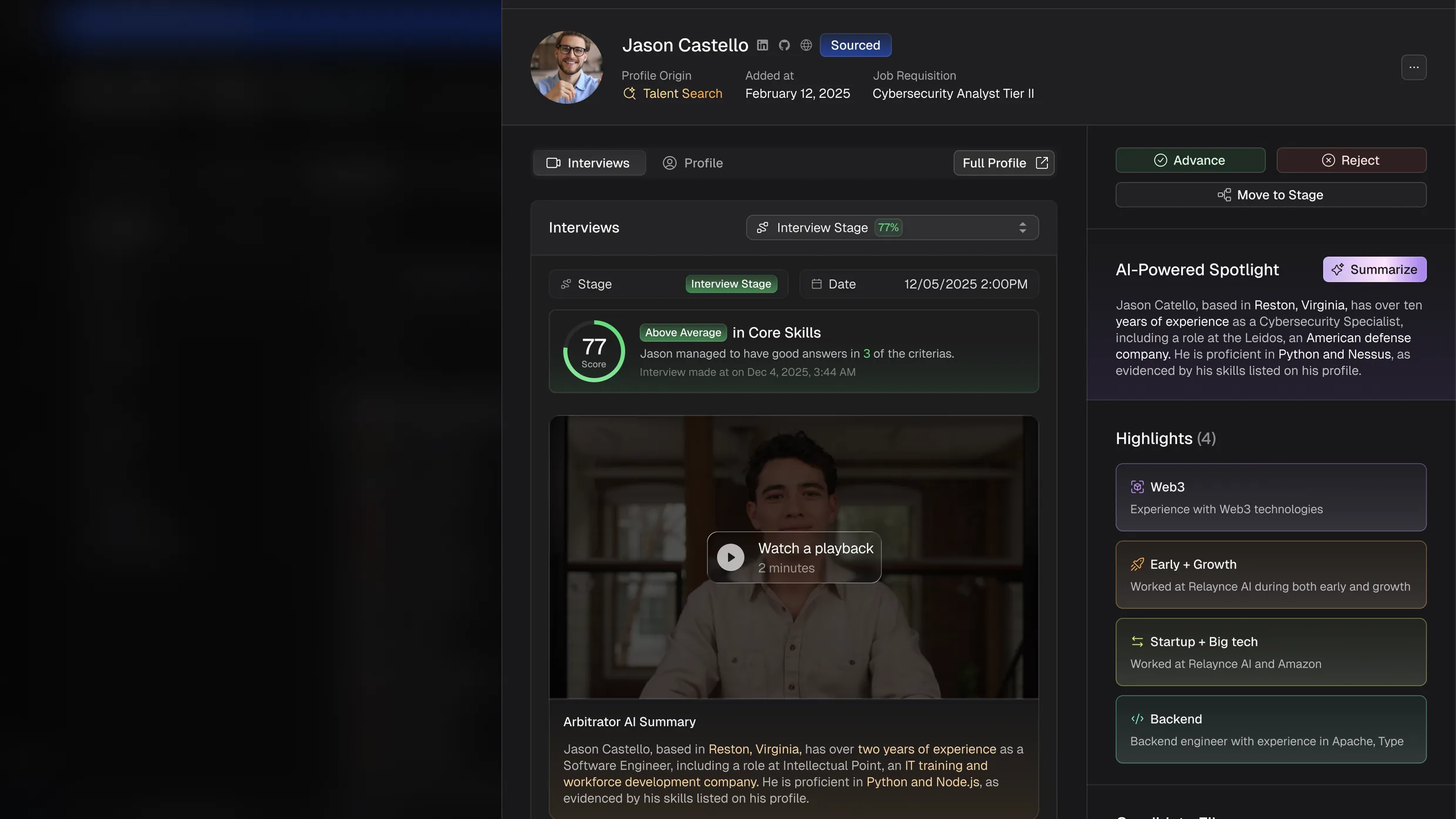
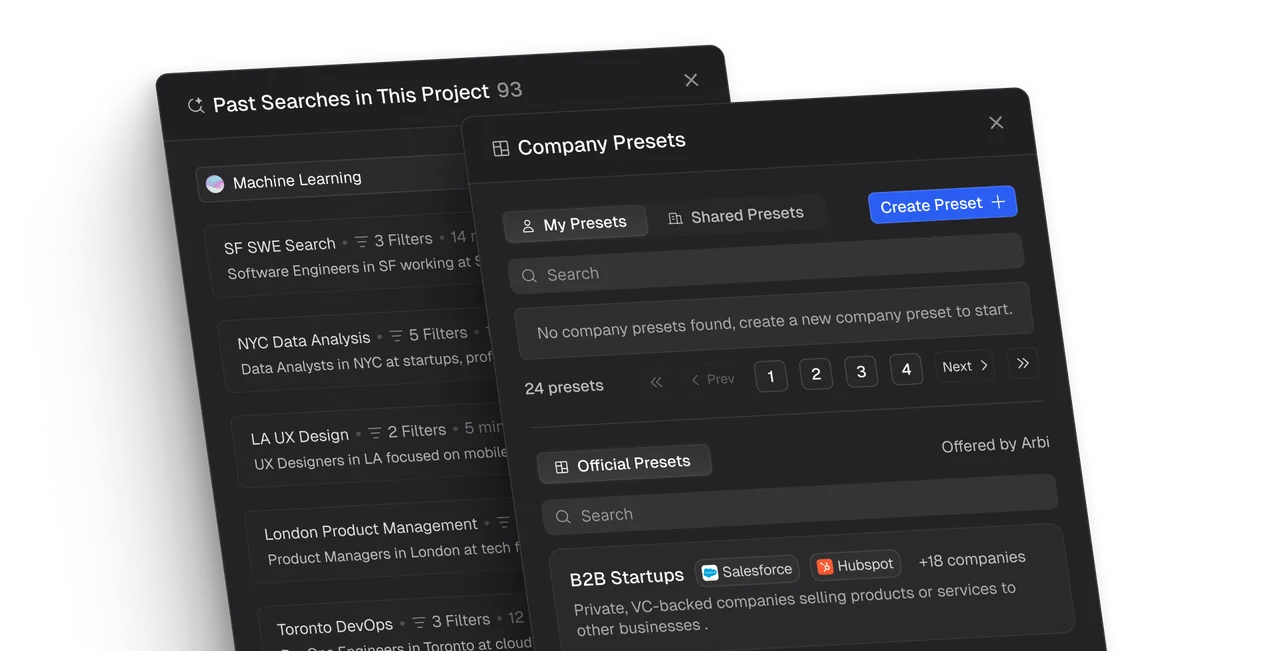
Saved searches listed with the number of new matches found since each was last opened
  • NewAny search can be saved, named, and shared with the rest of your team.
  • NewSaved searches re-run on a schedule and show how many candidates are new since you last looked.
  • ImprovedHard filters like work authorisation and location are now separated from the description, so widening the brief does not quietly drop a constraint.
  • FixedDuplicate profiles surfaced from more than one source are collapsed into a single result.
v2.14
Screening

Every verdict shows its passage

A score nobody can audit is a rumour with a number attached. Each requirement in the review drawer now opens onto the exact sentence in the profile that settled it.

The review drawer with a requirement expanded to show the passage that satisfied it
  • NewClicking a requirement highlights the source passage in place, with the surrounding paragraph left visible for context.
  • NewNot evidenced is now a distinct verdict from a fail, and it renders differently everywhere it appears.
  • ImprovedMarking a verdict wrong captures the criterion and the passage as a labelled example, which is what we evaluate model changes against.
v2.13
Sequencing

Analytics per step, not per campaign

A campaign-level reply rate tells you that something is wrong without telling you which message caused it. Performance is now broken out by step.

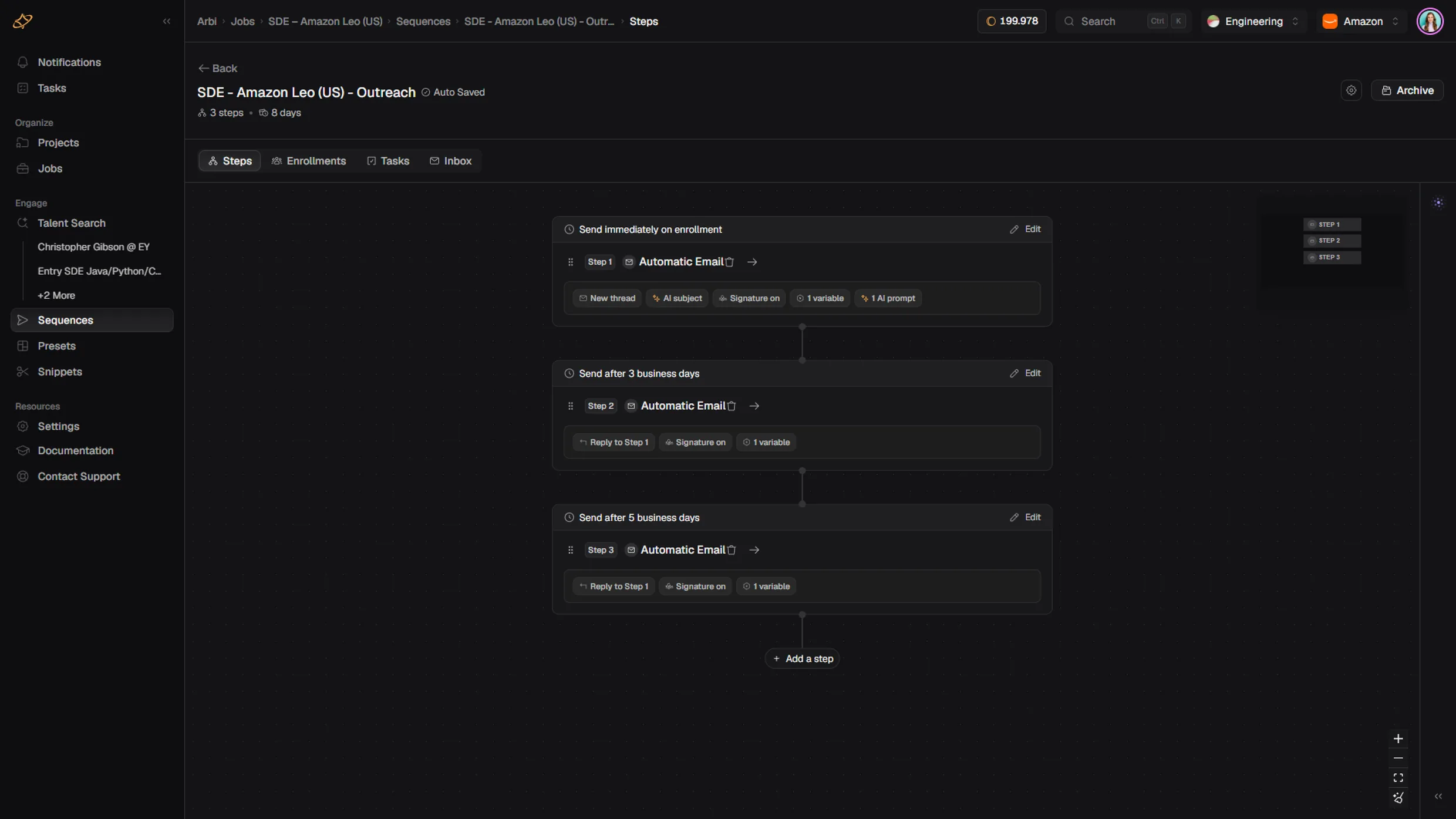
Sequence steps listed with open, reply, and decline rates for each
  • NewOpen, reply, and decline rates are reported for each step in a sequence.
  • NewSteps can be reordered or removed while a sequence is live without resetting anyone already partway through it.
  • ImprovedSending windows respect the recipient's timezone rather than the sender's.
v2.12
Interviewing

Candidates book their own interviews

The scheduling thread is the slowest part of a fast loop. Candidates now get a portal that shows real availability across every interviewer on the panel.

The candidate portal showing interview times available across the panel
  • NewA candidate portal with live panel availability, rescheduling, and a calendar invite that lands with the right joining details.
  • ImprovedPanel conflicts are resolved before times are offered, so a slot cannot be taken twice.
  • FixedInvites sent to candidates in a different timezone no longer display the interviewer's local time.
v2.11
Platform

SSO, SCIM, and audit exports

The work that makes a tool adoptable by a company rather than a team. Directory sync, enforced sign-on, and a complete record of who decided what.

  • NewSAML single sign-on with enforced login, plus SCIM provisioning against Okta, Entra, and Google Workspace.
  • NewAudit exports covering every verdict, criterion edit, and stage re-run, delivered as CSV or to an S3 bucket you own.
  • ImprovedRoles are now scoped per job rather than per workspace, so an agency partner can be given one req and nothing else.
  • FixedDeactivating a user no longer detaches the verdicts they recorded from the audit trail.

The future of recruiting is here.

Source
Screen
Sequence
Interview
Recruiters using Arbi on a laptop