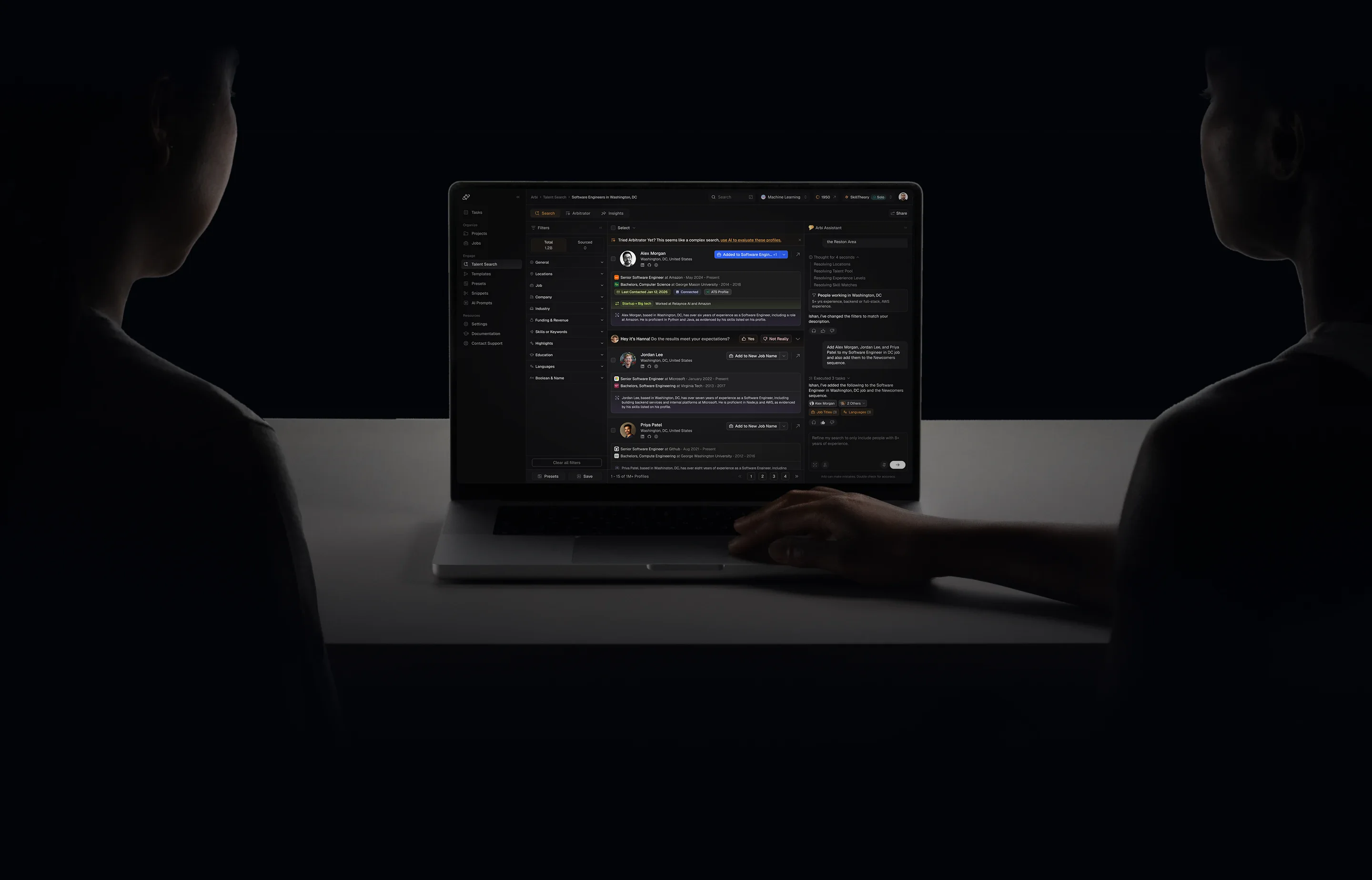
Scored on what you asked
Answers are graded against the criteria for the round, so the score tells you where a candidate sits relative to the bar rather than to whoever else applied.
Build the interview once and Arbi conducts it as a real conversation, follows up on vague answers, and returns a scored breakdown with the recording and transcript attached.
Request a Demo


Communication, knowledge, problem solving, and confidence are each rated out of a hundred, every question is marked, and the full playback sits beside the summary so any claim can be checked in seconds.
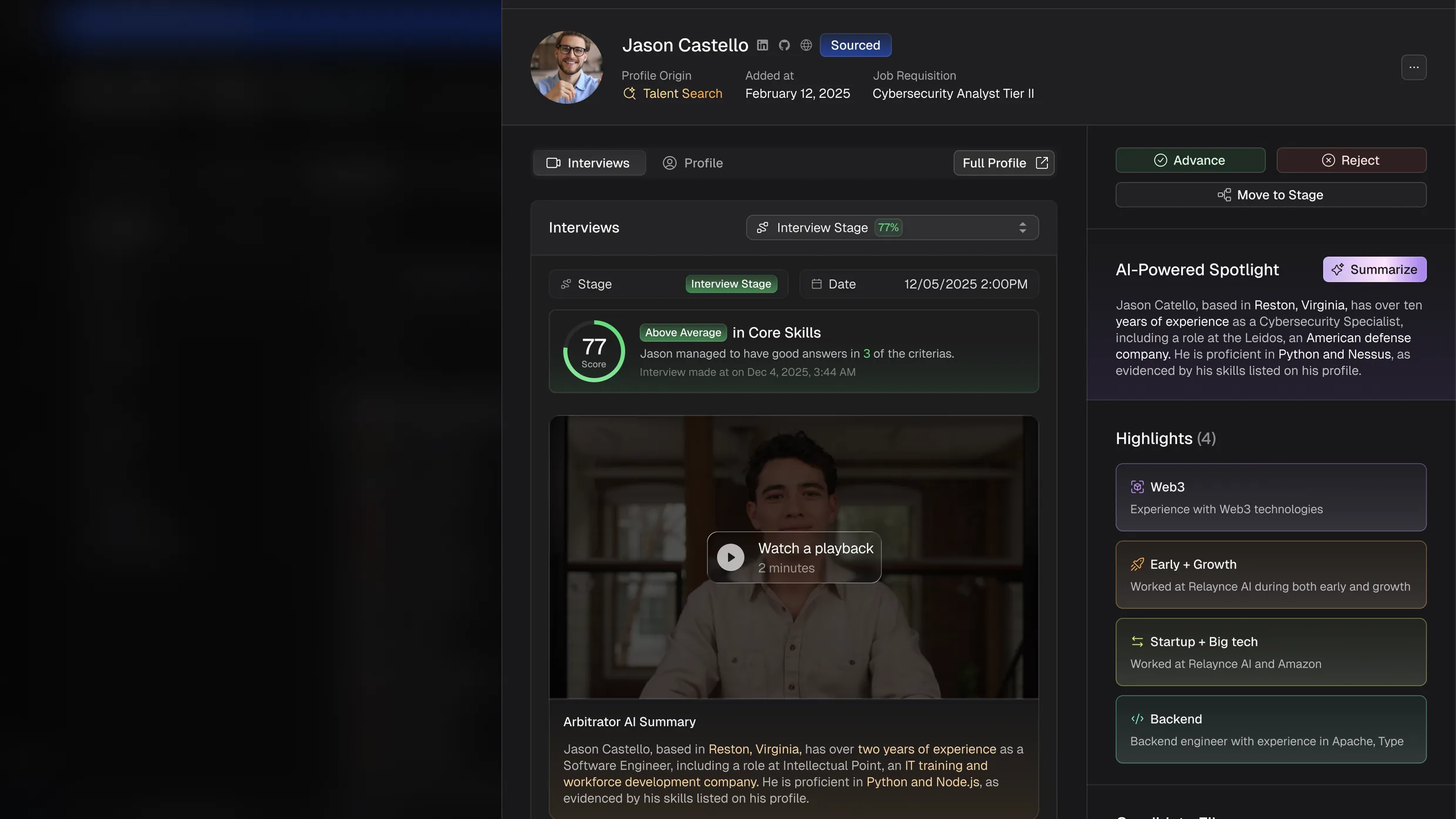
Answers are graded against the criteria for the round, so the score tells you where a candidate sits relative to the bar rather than to whoever else applied.
Jump to the moment behind any rating instead of taking the summary on trust, and share the playback with a hiring manager in a single link.
Notes, mentions, and decisions live on the candidate, so the debrief happens on the profile rather than in a thread nobody can find later.
Candidates get a portal with every round in one place, a practice interview before the real thing, and clear guidance on what to expect. Fewer no shows, better answers, and a brand that survives the process.
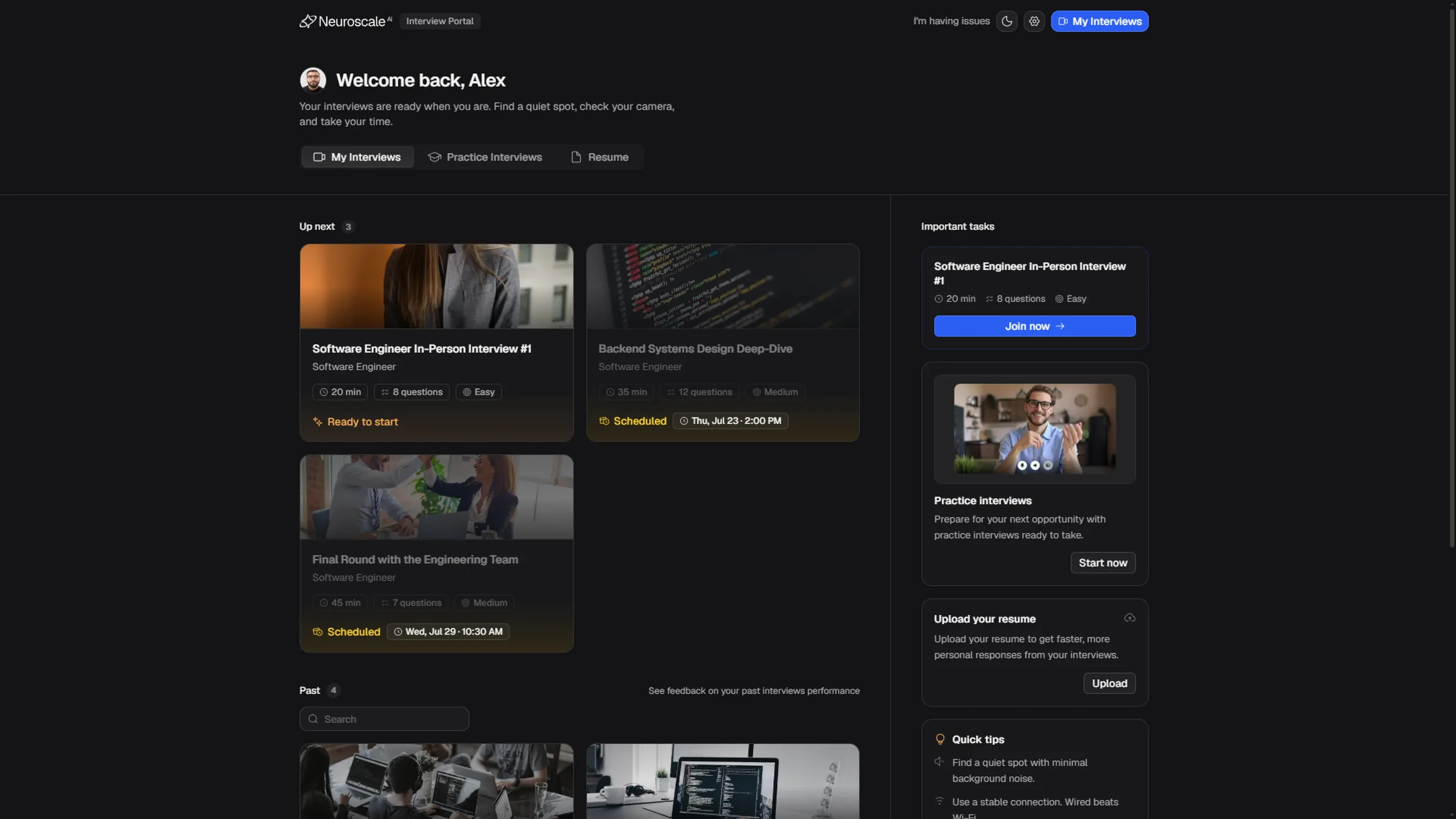
No calendar tetris and no time zones to reconcile. Candidates take the round when they are ready, which is almost always sooner than the next mutual free slot.
A practice round lets candidates settle their nerves and test their setup, so the interview you score reflects their ability and not their microphone.
Arbi speaks, listens, and follows the thread. It can put a whiteboard in front of a candidate for a system design question, ask them to talk through the sketch, and keep the round moving without anyone from your team in the room.
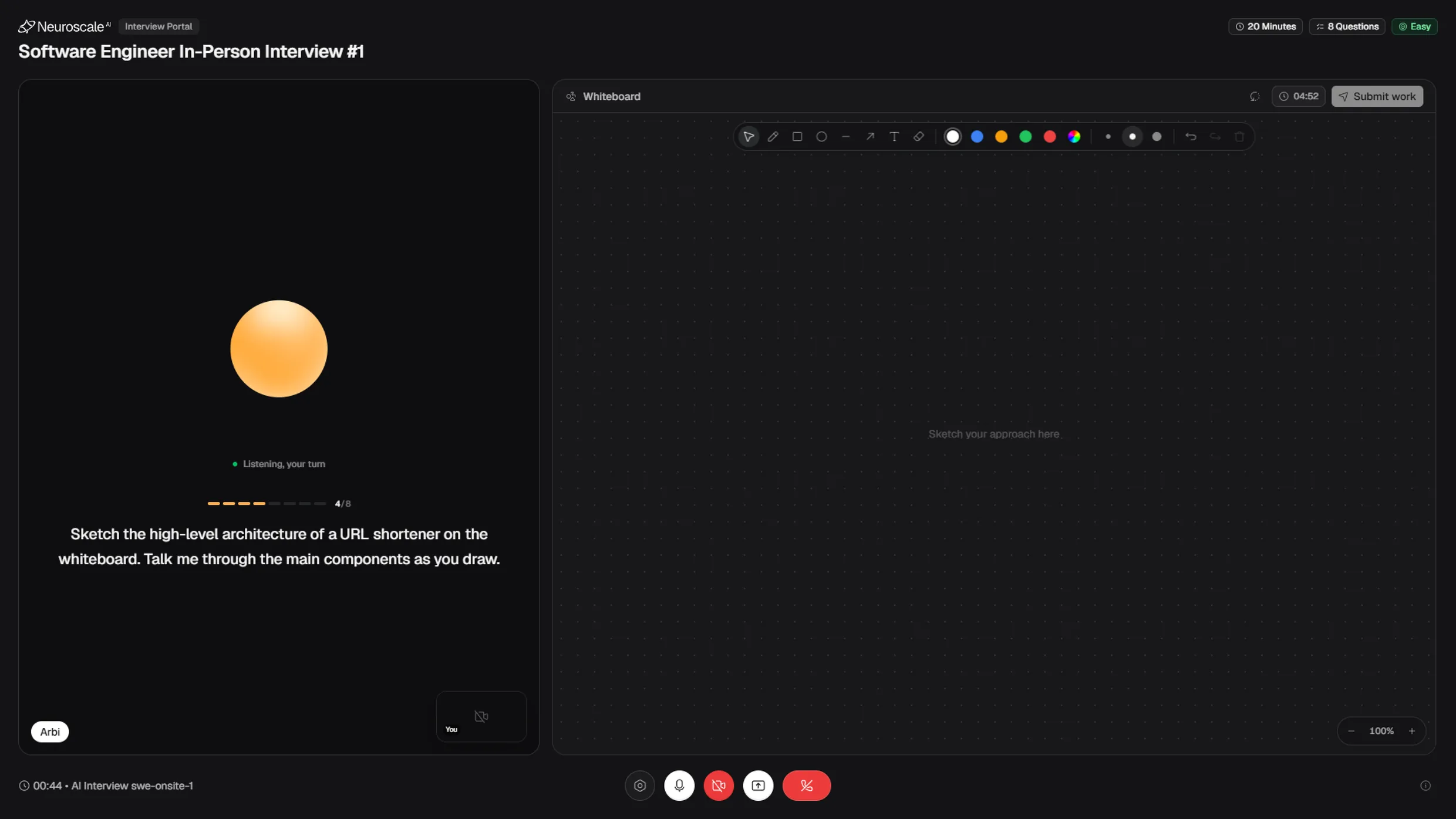
The interviewer asks out loud, waits for the answer, and probes when something is vague, which is how you find out whether the experience is real.
Candidates sketch the architecture while they explain it, and the drawing is captured next to the transcript for whoever reviews the round later.
Drag in a greeting, a direct question, an AI guided topic, or a multiple choice check, and the same structure runs for every single candidate.

“We used to spend hours reviewing resumes and chasing hiring signals, but Arbi made candidate screening feel instant.”Book a Demo
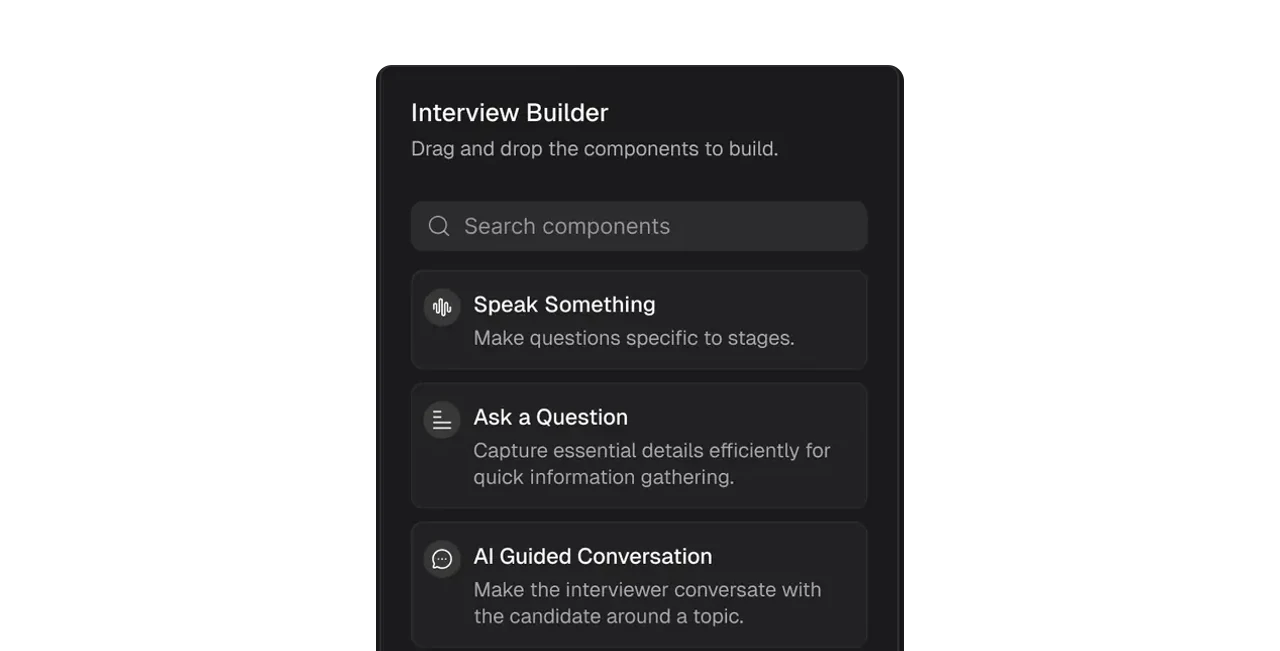
Drag and drop the steps, write the questions in your own words, and reorder the round without touching a template or waiting on engineering.
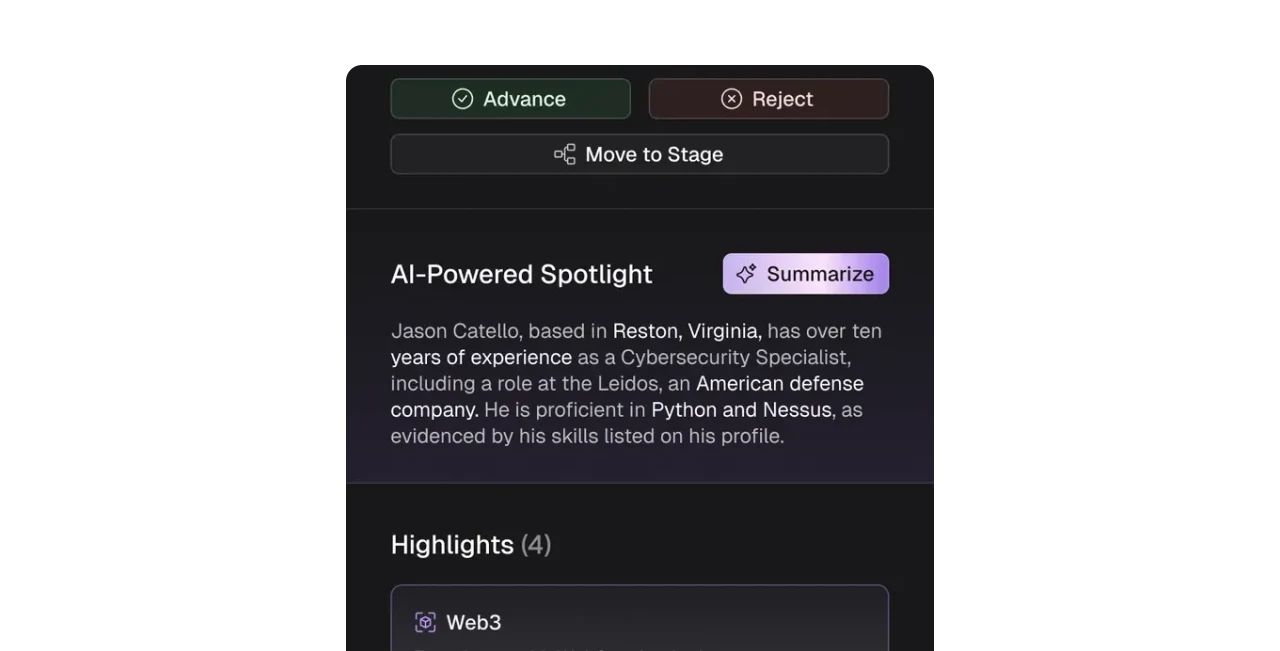
Highlights, spotlights, and matched skills sit beside the score, so handing a candidate over is one screen rather than one more meeting.
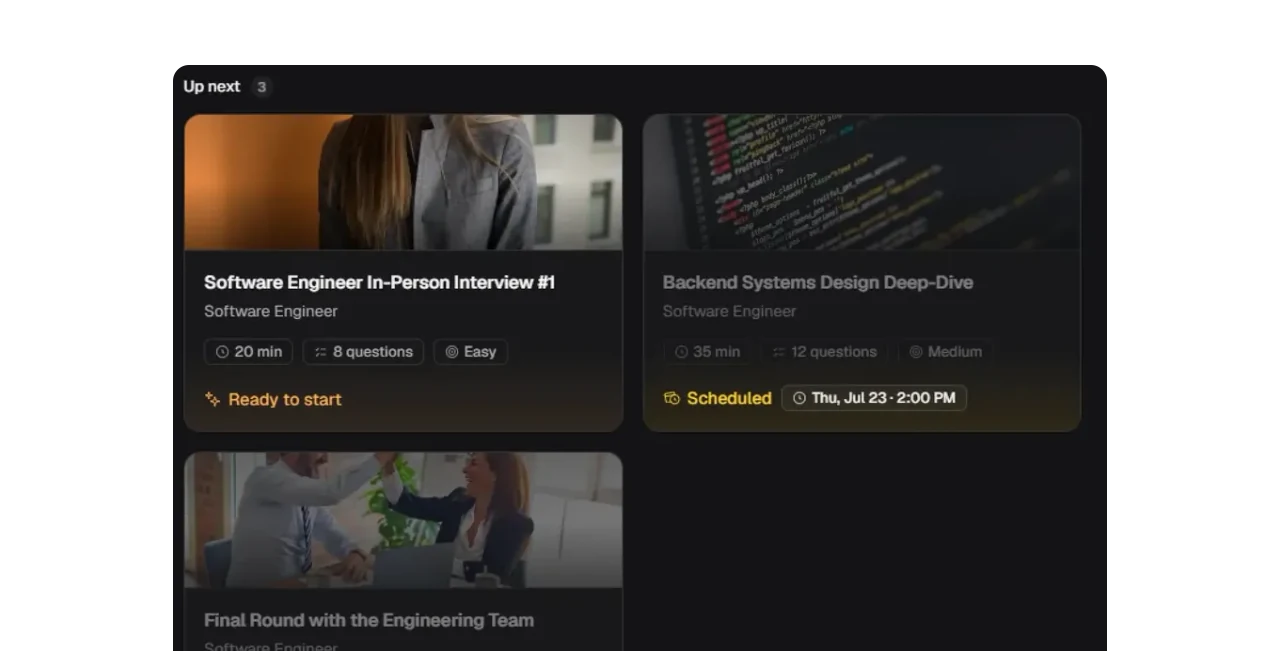
Upcoming rounds, past feedback, practice interviews, and resume upload in one place, so nobody has to email you to ask what happens next.
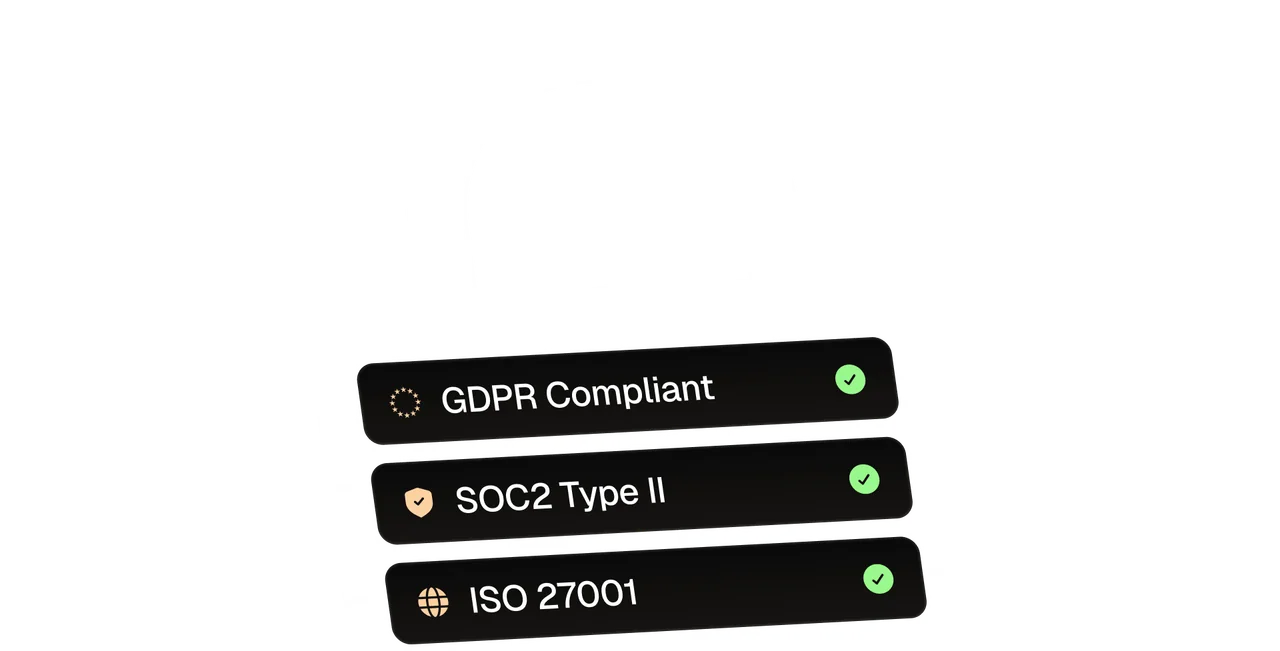
SOC 2 Type II, SSO and SAML, SCIM provisioning, role based permissions, and data residency controls, with every interview and decision logged to an audit trail.







Connect Arbi to your existing stack with 50+ integrations built for modern hiring workflows.





An AI interview is a live, spoken conversation between a candidate and an AI interviewer that follows a structure you defined. It is not a recorded form where someone talks into a camera for two minutes. The interviewer asks a question, listens to the answer, and follows up when something is vague, which is how you find out whether the experience on the resume is real.
You build the round from blocks: an opening greeting, direct questions, AI guided topics where the interviewer is free to explore, and multiple choice checks. Arbi then runs that same structure for every candidate, speaking out loud, waiting for the answer, and probing where the response leaves a gap. The candidate joins from a browser with no software to install.
Yes, and that is usually where the time is saved. Candidates open their portal, see what is scheduled, and start the round when they are ready rather than when the next mutual free slot appears three weeks out. There is no calendar to reconcile and no time zone to work around, so first round scheduling stops being a bottleneck.
Each answer is graded against the criteria for that round, and the interview returns an overall score alongside ratings for communication, knowledge, problem solving, and confidence. Every question is marked individually, so you can see whether a mid range score came from one weak area or a consistent pattern across the whole conversation.
Yes. The full playback and transcript are attached to the candidate's profile next to the summary, so you can jump to the moment behind any rating instead of taking the score on trust. Share the recording with a hiring manager in one link and let them form their own view before the debrief.
They do. A whiteboard can be put in front of the candidate for system design and architecture questions, so they sketch their approach while they talk it through. The drawing is captured alongside the transcript, which gives whoever reviews the round the reasoning as well as the answer.
Every candidate gets the same structure, the same questions, and the same criteria, which is more consistency than a panel of five interviewers managing their own calendars will ever achieve. Candidates can also run a practice round first to settle their nerves and check their setup, so the interview you score reflects their ability rather than their microphone.
Yes. Interview scores, recordings, and stage changes write back to your ATS, so the pipeline stays accurate in both systems. Candidates can be moved into an interview round straight from a job, and anyone you advance carries their full history with them.