

Clinical criteria, honored
Licenses, states, and certifications screen as hard requirements, not as keywords that might match.
Healthcare hiring is licensed, urgent, and endless. Arbi checks credentials up front, screens every applicant the day they arrive, and finds the clinicians who were never going to see your posting.
Join the next generation of companies hiring smarter, faster, and on autopilot with Arbi.
Case StudiesWhile a clinical role sits open, the work is covered by overtime and agency shifts. Arbi shortens the open days without cutting the checks that matter.
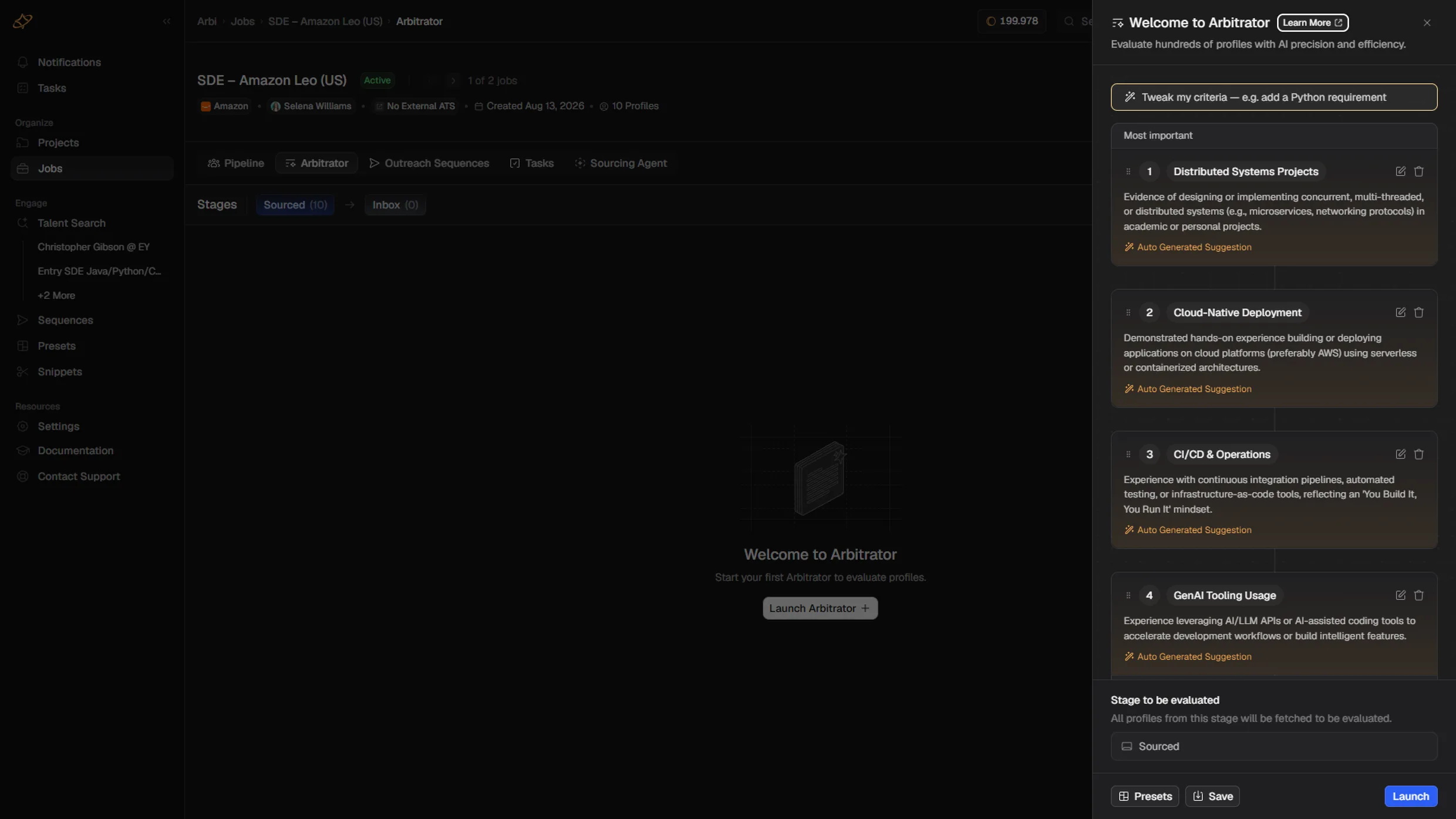
Licenses, certifications, and unit experience become written criteria on the requisition, checked the same way for everyone.
Applications are read against those criteria the day they land, so the queue a recruiter opens is already sorted.
Arbi searches the market for matching clinicians and reaches them with verified contact details, from your own mailboxes.
Finalists arrive with criteria met and evidence attached, ready for the hiring manager and for credentialing.
A clinical bar has hard lines a general tool cannot see: the license, the state, the unit hours. Arbi reads each application against the requirements you wrote and records why every verdict was reached, at the pace applications actually arrive.
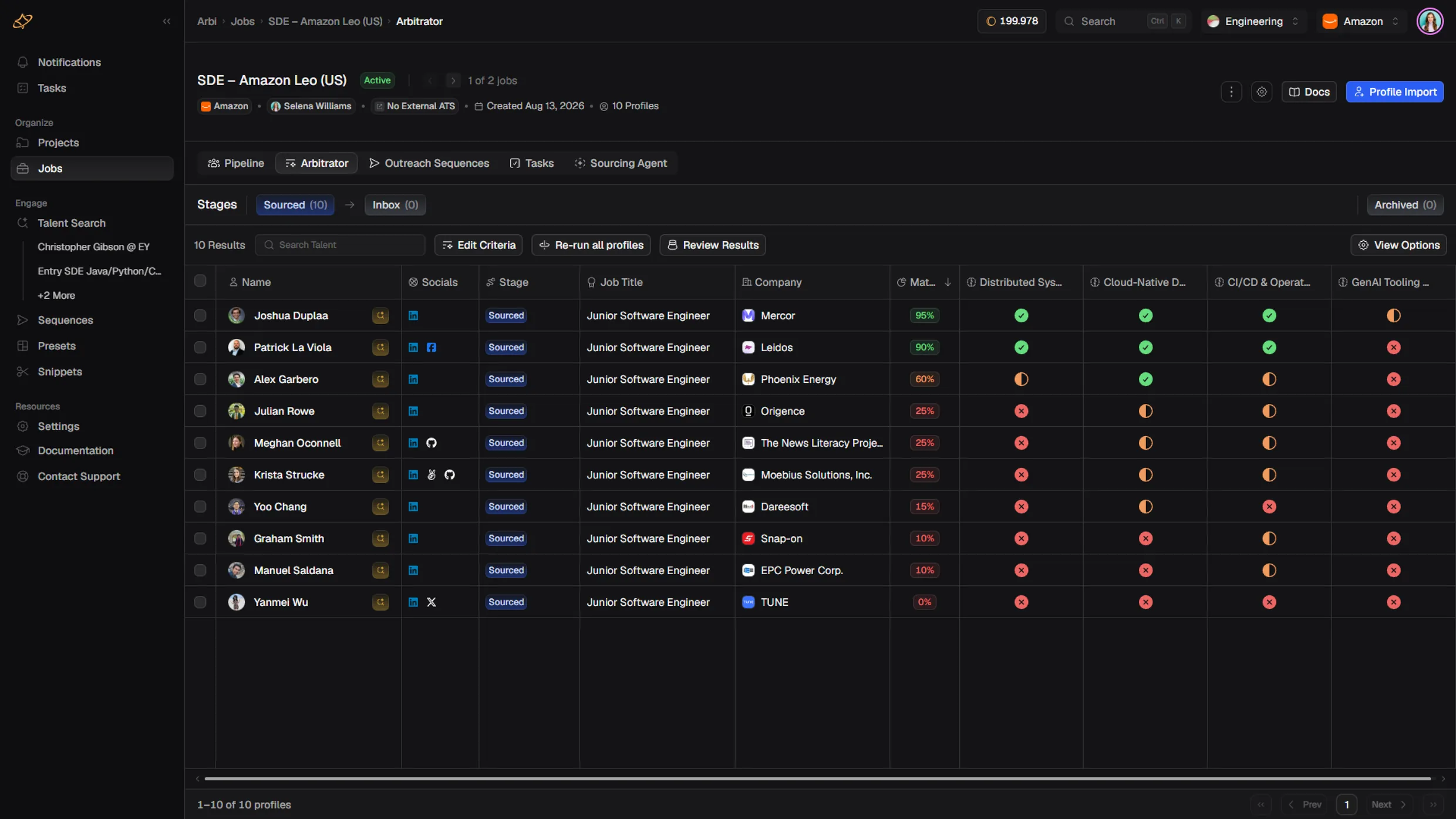
Licenses, states, and certifications screen as hard requirements, not as keywords that might match.
The response is read as it arrives, so the fastest applicants are not lost to the slowest process.
Every check and every verdict is documented as it happens, so downstream teams inherit a file, not a mystery.

“The audit pack used to be a fortnight of someone's life. It is now an export. That alone paid for the year.”
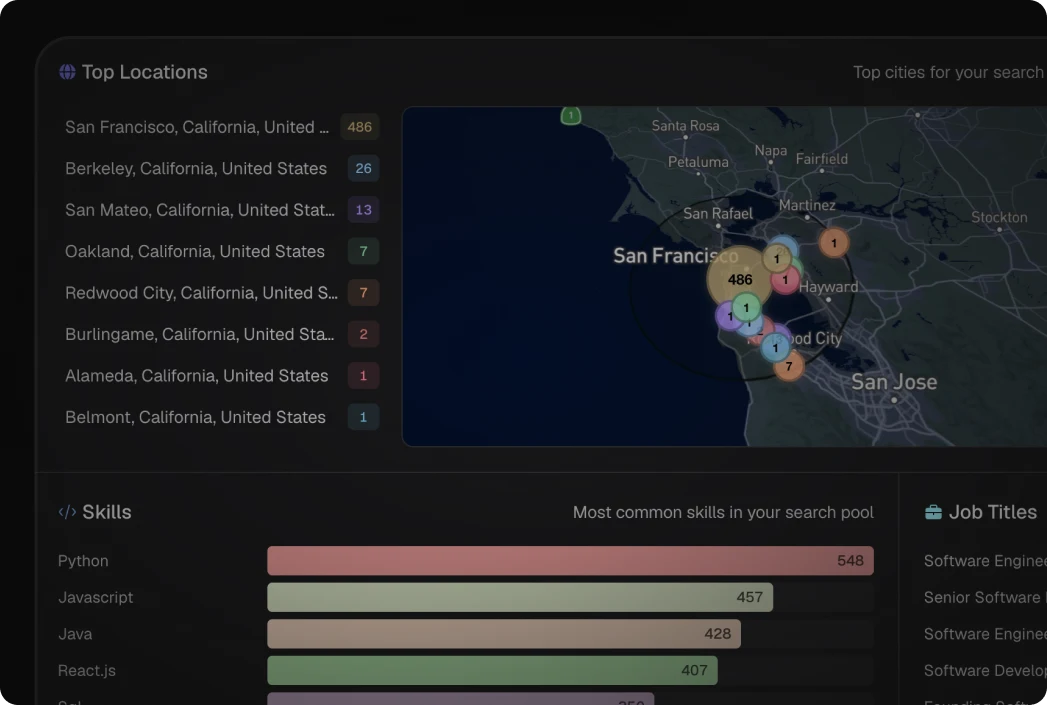
Each unit runs its own criteria and reviewers while talent leadership sees every open role and every bottleneck in one place.
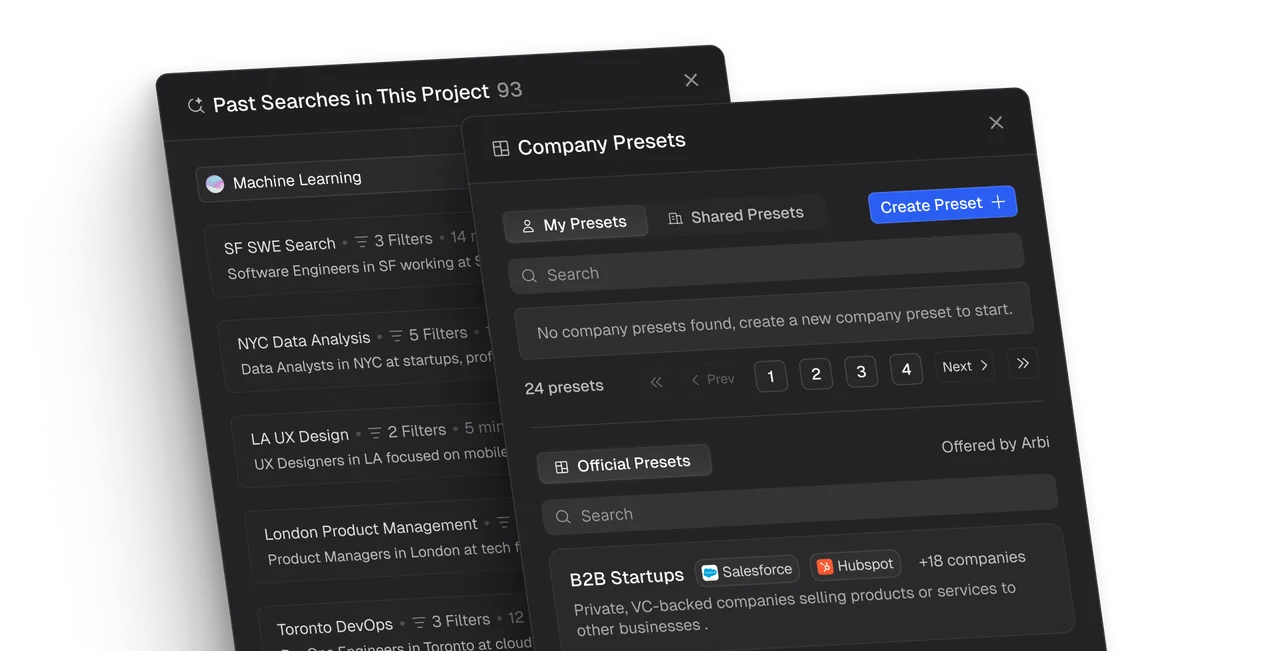
Nursing and allied health reqs never really close. Saved searches keep the market view warm so reopening a role takes a click.
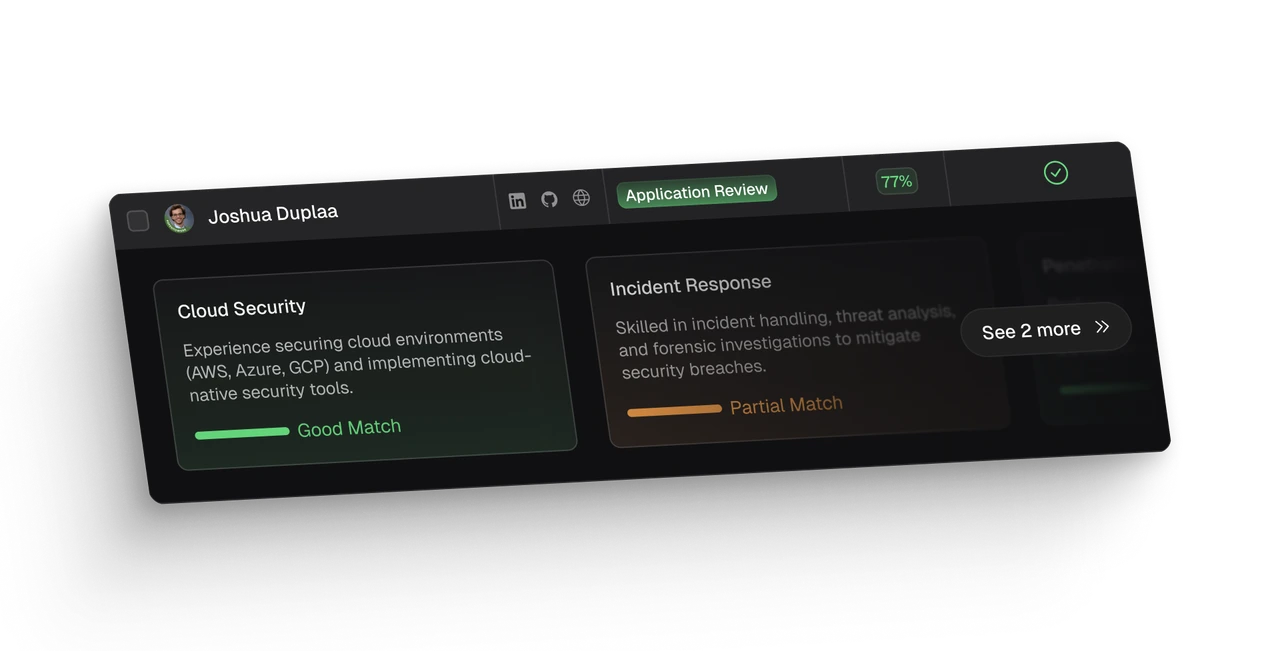
Each decision carries the lines it was based on, so a hiring manager pushing back gets an answer instead of a shrug.
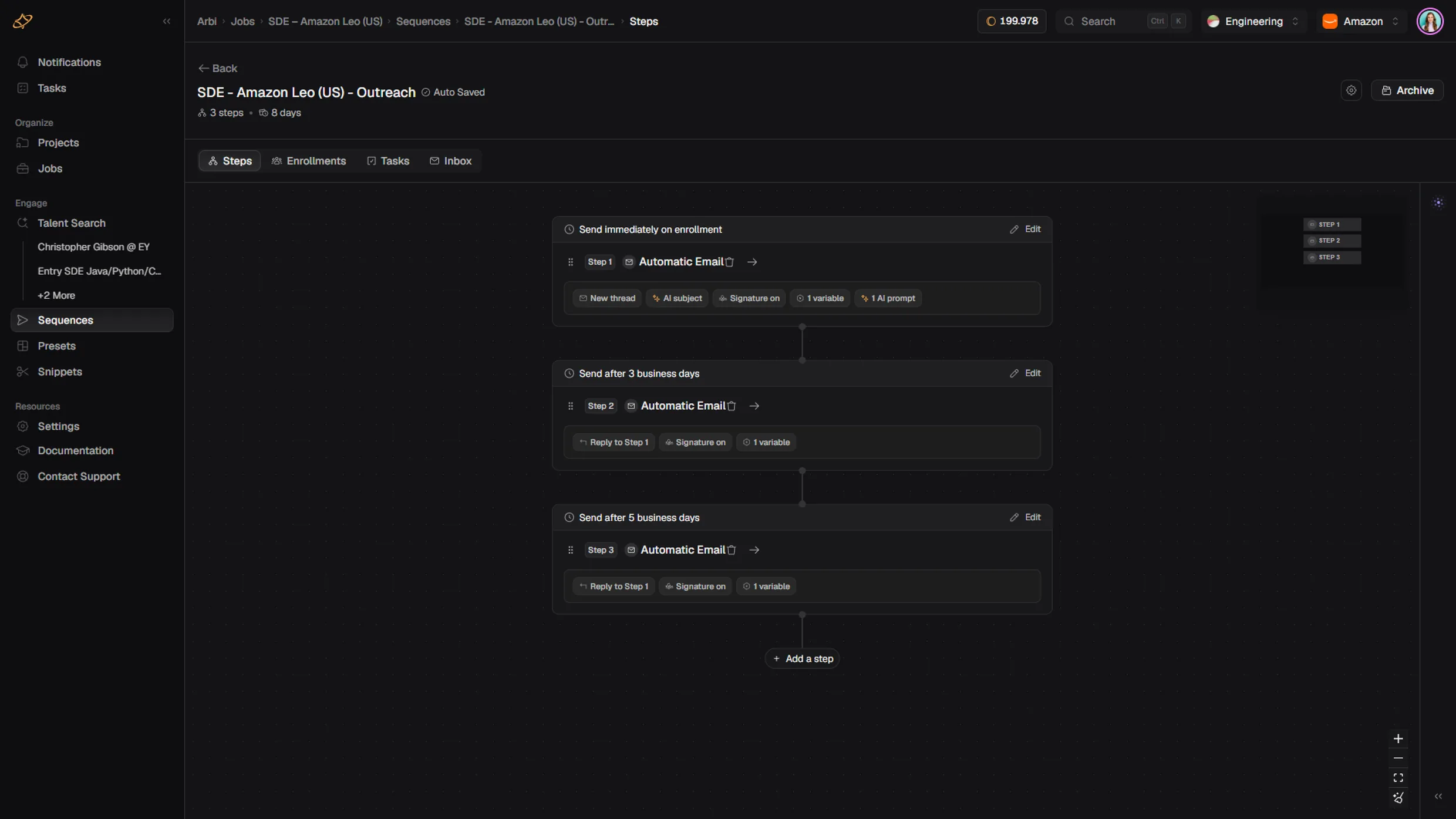
Verified personal emails and direct numbers, sequenced from your own mailboxes, for the people who never check job boards mid-shift.







Connect Arbi to your existing stack with 50+ integrations built for modern hiring workflows.





License requirements are written criteria checked at the front of the funnel, so an RN role only surfaces candidates with the right license for the right state, and the check itself is on the record for credentialing to pick up.
Every requisition carries its own criteria and its own reviewers, so the ICU, the lab, and the front office can run at once without a recruiter copying between spreadsheets. Leadership sees one pipeline across all of them.
Shortage roles are search problems, not posting problems. Arbi searches the whole market for matching clinicians, including those not actively looking, and gives you verified contact details to reach them directly.
Workspaces are isolated per account with role-based access, and data handling is documented for your security and privacy review. Candidate records live in one governed place instead of inboxes.
Arbi syncs in both directions, marks the candidates who already exist in your system, and pushes new ones into jobs or sequences in one click, so the HRIS stays the system of record.
For clinical roles, the cost is agency backfill, overtime, and burnout on the unit. Arbi's effect is measured in vacancy days removed: the screening and sourcing that took weeks happen the same day the requisition opens.