

Substance over keywords
A decade of systems work reads as such, whatever words the profile happened to use for it.
Keyword search rewards whoever writes the best profile. Arbi reads real experience against real requirements, ranks the whole market, and shows the reasoning, so technical hiring runs on evidence instead of string matching.
Join the next generation of companies hiring smarter, faster, and on autopilot with Arbi.
Case StudiesThey wrote two lines about themselves and shipped a decade of systems. Every string-matching tool skips them. Arbi is built to not.
State what the engineer will build and what that requires. Arbi turns it into a live search and criteria the hiring manager can edit.
The whole market is read against those criteria, including the people whose titles and keywords would never match a Boolean.
Applicants and sourced candidates alike get a recorded verdict with the lines it was based on, at machine speed.
Outreach references what the candidate actually built, sends from your own mailboxes, and follows up on its own.
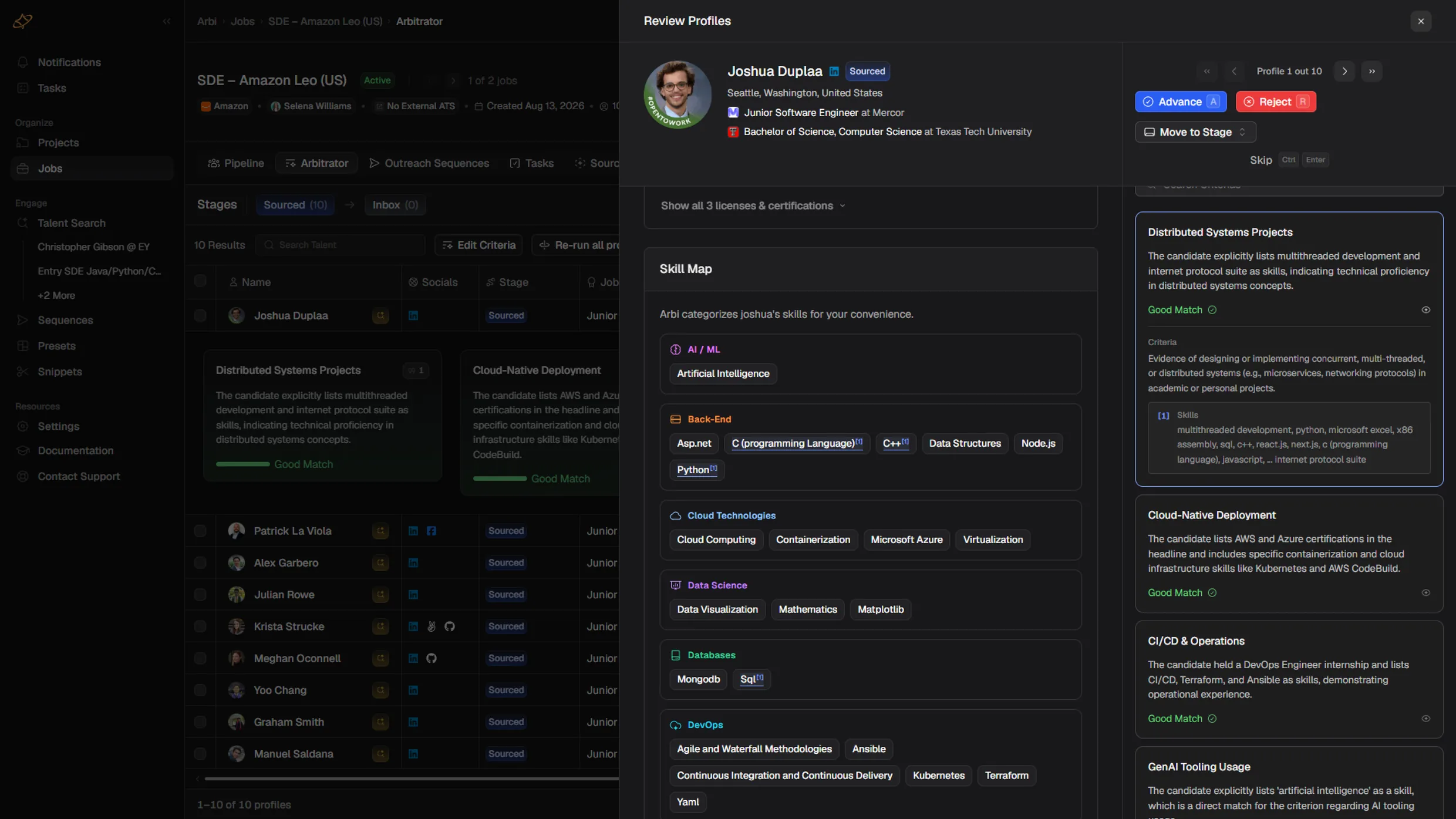
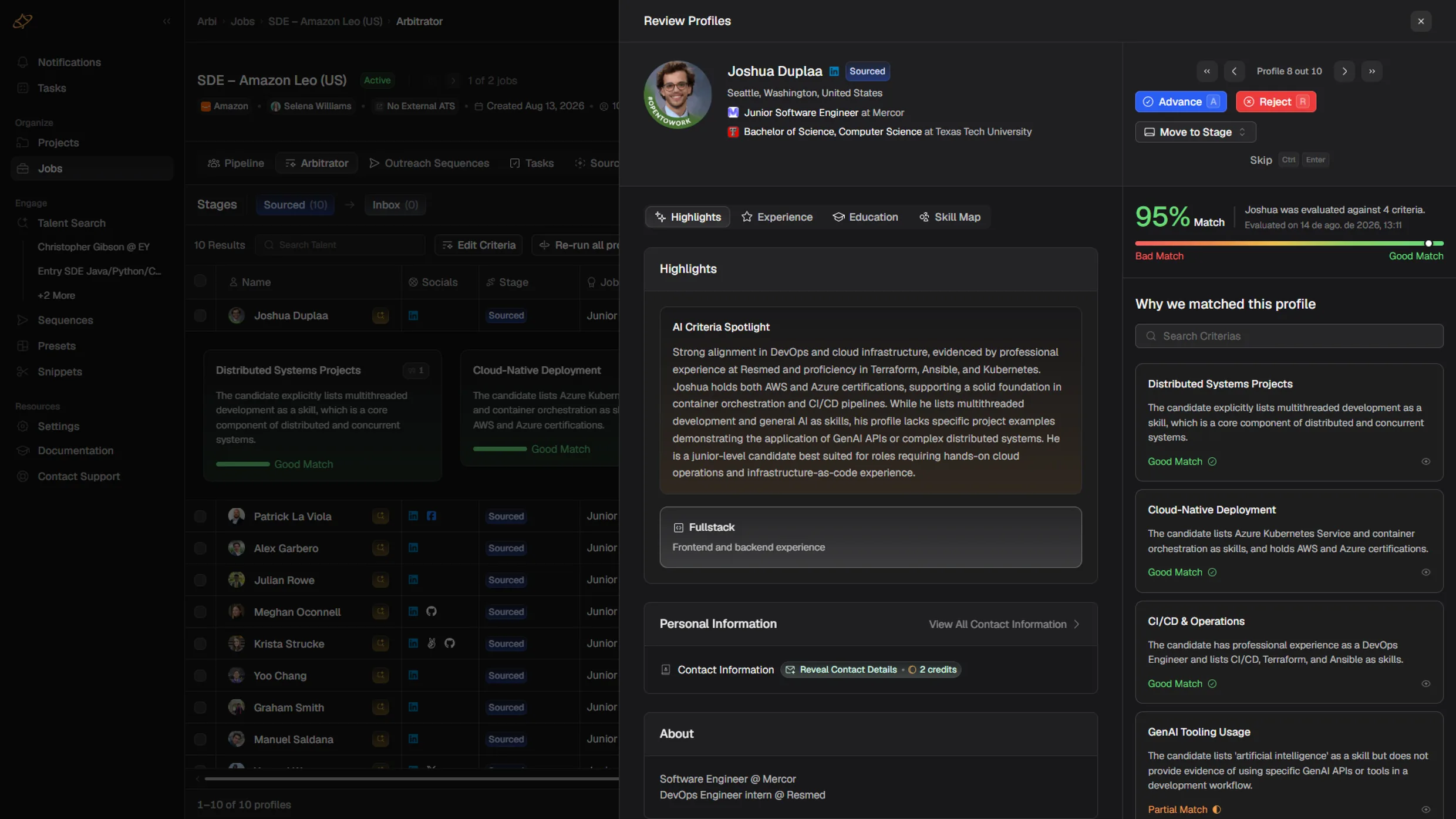
Arbi maps what a candidate has actually worked on against what the role actually needs: the systems, the scale, the depth. The verdict comes with the evidence, so a recruiter can defend it and a hiring manager can trust it.
A decade of systems work reads as such, whatever words the profile happened to use for it.
The engineers Booleans miss, surfaced and ranked with the reasoning attached.
Criteria written with the hiring manager, applied consistently, and open to argument in one place.

“Half the people we ended up hiring would never have appeared in the searches we had been running for two years. They were not hiding. Our vocabulary was just too narrow to describe them.”
Each candidate's experience mapped against the role's requirements, so the gap analysis is done before the first call.
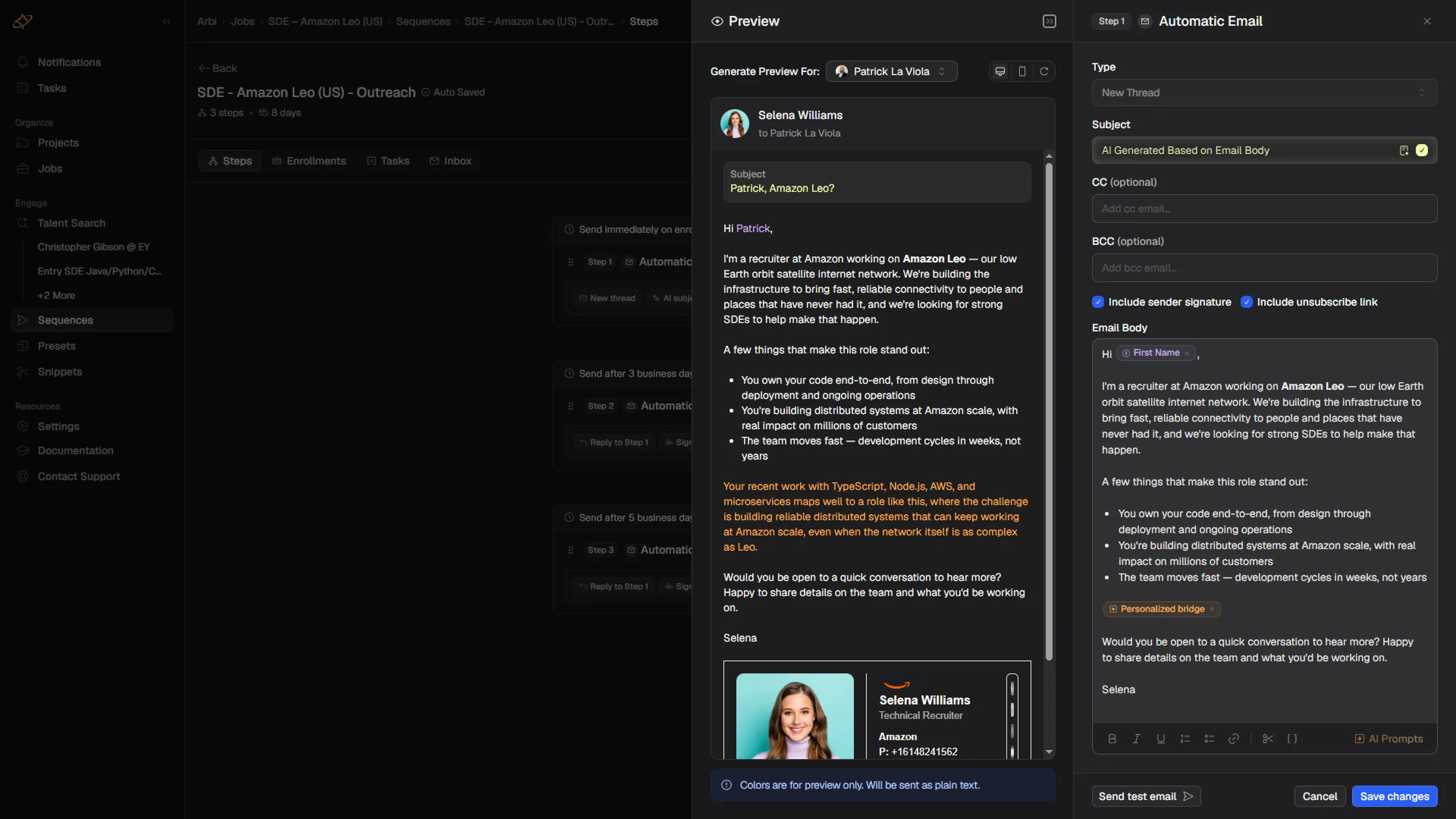
Sequences that reference what the candidate built, sent from your engineers' and recruiters' own mailboxes.
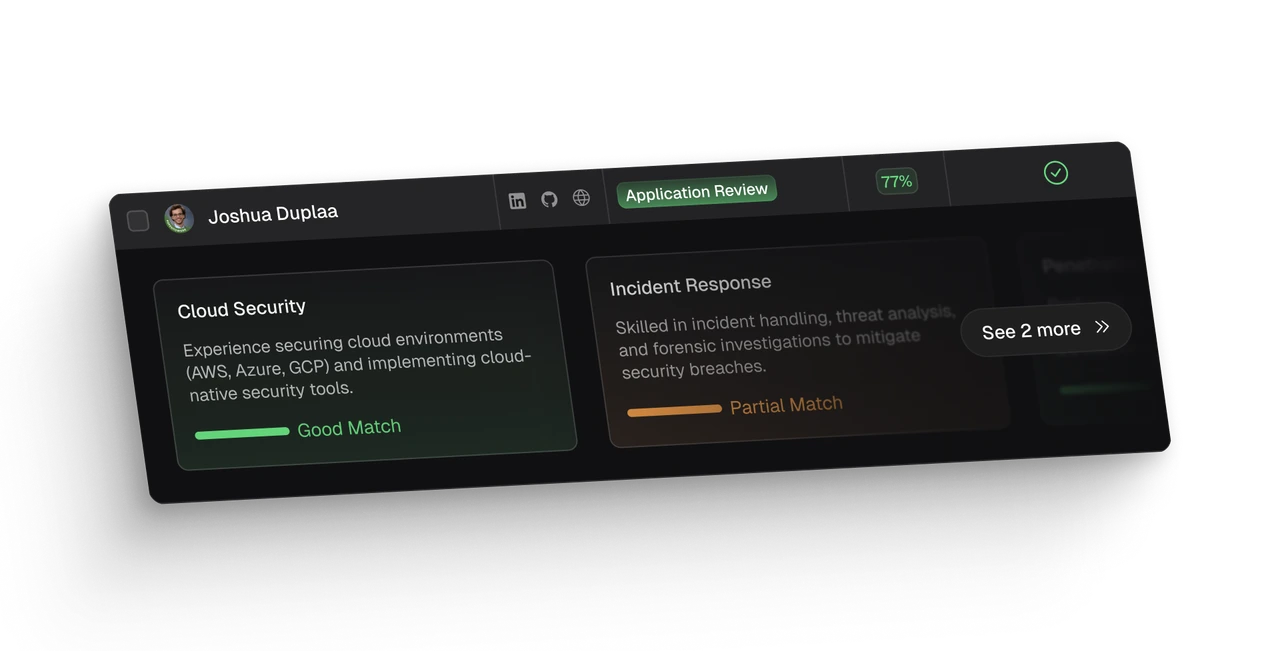
Each decision carries the lines it was based on, so recruiter and hiring manager argue about the bar, not about each other.
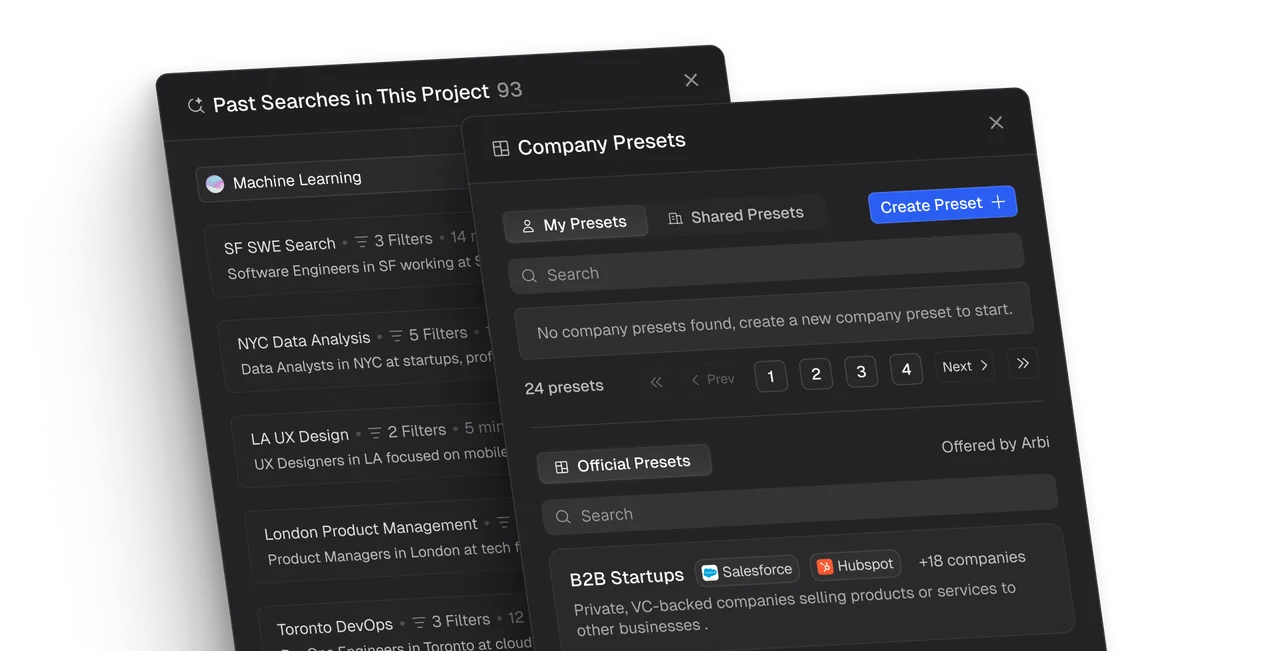
The search behind a filled role is saved with everything it learned, ready for the next headcount on the same team.







Connect Arbi to your existing stack with 50+ integrations built for modern hiring workflows.





A Boolean string finds people who used your words. Arbi reads what people have actually built against what the role actually needs, so the distributed systems engineer whose profile says nothing about distributed systems still shows up, ranked and explained.
That is the core of it. Screening reads the substance of each profile and application against your written criteria and records the evidence for every verdict, so a profile that names ten frameworks and shows none reads exactly as it should.
Both work from the same requisition. The hiring manager writes or edits the criteria, sees who passed and why, and can push back on the bar itself instead of on individual resumes after the fact.
Speed and precision are the levers you control. Arbi puts you first into the inbox of people who match, with outreach that reads their actual work, which is a very different message from the fiftieth generic ping they got that week.
Arbi syncs in both directions with the ATS you already run, marks candidates who exist in it, and pushes new ones into jobs and sequences in one click.
A role described in the morning has a ranked, screened market view by lunch. From there the calendar is the bottleneck, not the pipeline.